Welcome!
My name is Philip Dyer-Perry, and I love to go to places I have never been before (and a few that I have). I am passionate about travel, mainly by rail (there is no better way).
My ‘day job’ is that I am a Catholic priest, based in the United Kingdom. When I am not travelling, which is (contrary to what some might say) most of the time, I am busy in my role as Parish Priest (Pastor) of a small parish community in the beautiful town of Staines (well worth a visit by the way).
This blog will hopefully become my journal of travels past, present, and future and I very much hope that you enjoy it. You can expect to see lots of pictures and accounts of places, rail journeys, and unusual and (what I consider to be) funny sights. You can also expect to hear a bit of both my religious and political views and opinions (as I do have those). Some of this you will like, some you may be less comfortable with – by reading and following this blog you are not endorsing or agreeing with them, so just enjoy!
I might add that any views or opinions expressed in this blog are my own and not necessarily shared by my parish community, my diocese, the Catholic Church, or Network Rail for that matter…
Again, welcome and enjoy!
Philip
Travelling is not just about exotic, exciting, and far away destinations. It’s a cliche to say that the journey is as important as the destination, but it is at least a true cliche. Travelling is not just about being transplanted as quickly as possible to a destination – travel is a process that is best enjoyed if it is appreciated.
One of the things I most enjoy about travelling is the sense of transition from the ordinary and the familiar to what is unfamiliar and exotic. The best journeys are the ones that express this in the most interesting way.
That is, perhaps, why I don’t much like flying. For me the most interesting part of air travel is the journey to or from the airport, which incidentally, is rarely simple and straightforward. The bit with the airports and the flight has a soul-destroying same-ness which sucks the sense of adventure out of any journey, regardless of purpose or destination. While a delay or unexpected incident may occur, it rarely adds interest to a trip, and usually results in several hours sitting in a bland terminal building.
Pretty much any other mode of transport is different, for when travelling by rail, road, boat, or on foot, it is possible to find interest and indeed joy – provided, of course, that you’re not in a hurry…
Today’s journey promises to be one of those trips. An unexpected funeral meant that my carefully planned departure from Staines was replaced by a trip to the cemetery. After getting a lift to the nearest station and changing out of my vestments on the roadside, I made the train with seconds to spare. South Western Railway is on strike today, and the ferry is due to be two hours late due to sea conditions, so as I sit here on the platform floor at Woking station, I can’t help wondering how much of this trip will go to plan – and how much won’t. However this is my summer break, I love travelling, and as the train (which is now arriving) winds its way through the beautiful Surrey hills towards Portsmouth, I can’t wait for what is in store.
Dear and esteemed reader, tomorrow I am departing on a long and interesting journey.
The tickets are ready, the bag is out of the cupboard, the tea bags are on the bed, and the parish will shortly be entrusted to the tender care of Fr. Michael Creech, our supply priest.
But where am I going? And how will I get there? Follow my posts and you can share a bit of my adventure…
There is an empire, an empire that stretches almost a third of the way around the world, where somewhere it always daylight and in another place always night, an empire which runs from the edge of the European Union to the Sea of Japan, from the Arctic Circle to the borders of Afghanistan, an empire that has withstood two world wars, the rise, fall, and rise again of oppressive regimes, a shared way of life that still grows strong and flourishes from the rising of the sun to its setting. That empire is the railway network of the former USSR. Although the political map of the region has changed beyond recognition, the railway rumbles on.
Although the railways of the various former Soviet states are no longer controlled by Moscow and much has changed, for better or worse, they are all pretty similar. It can be daunting experience riding the rails in this region, but this post explains the various classes of travel on conventional (non high speed) long distance trains.
Four Classes
Ever since Soviet times, there have always been four main classes of accommodation on long-distance trains in the former USSR. While not every train conveys all four classes, chances are that most services will have at least two of them. Before you plan your next trip to the former USSR, you’ll be glad I told you a little bit about them…
‘SV’ – The epitome of luxury and style
The highest and most expensive class is known as ‘SV’, which is short for ‘Spalny Vagon’, a term which literally translates as ‘Sleeping Car’. It is also referred as ‘First Class’, or even as ‘De Luxe’, which is quite an exaggeration. In Soviet times, it was known as ‘Soft class’, however don’t expect memory foam mattresses. ‘SV’ carriages usually have nine compartments, each with two lower-level bunks. A bit more space is most definitely a luxury, but it is not the ‘De Luxe’ that you or I may have been expecting. Apart from having half the number of passengers per compartment (and therefore half the queue for the lavatories), and a number of tasteful additions to the decor, it is a standard Russian-style long distance carriage.
Cooped up in Coupe
The next class down is ‘Coupe’, which is also known as ‘second class’. ‘Coupe’ translates as ‘compartment’. In Soviet times this used to be known as ‘hard class’. It is not, however, as bad as it sounds. The compartments and bunks are identical to ‘SV’, except there are also two upper bunks in each ‘coupe’, thus four people instead of two sharing the same space – and there double the number using the same shared facilities. Compartments are also less likely to be adorned with tasteful acoutrements, although net curtains are guaranteed and even some plastic flowers may feature. Coupe passengers are expected to make up their own bunks (SV passengers often have it done for them already), but the bedding is the same in all the top three classes.
See and be seen in Platskartny
‘Platskartny’ is the name given to the third class of travel. This is perhaps the most atmospheric of all the classes, and is worth trying at least once, if only for a short journey. The unique atmosphere is enhanced by the sound, sight, and indeed smell of 53 other passengers, as the bunks are arranged in alcoves in an otherwise open plan carriage. Toilet facilities are identical to the other classes – it’s just that there will be more people using them. Air-conditioning, which sort-of exists in the higher classes, may sort-of not exist in platskart. Choice of bed is pretty crucial in this class. While everyone has their preferences, the alcoves closest to the toilets (the lower-numbered berths) are probably best avoided. On one side of the aisle, bunks are arranged in alcoves of four (two lower, two upper berths). On the other side of the aisle, two chairs face each other over a small table. At bed time, an upper berth is lowered from the wall above the window, and the table is lowered and turned over to join with the seats in creating a lower berth. These two bunks are thus in line with the direction of travel. Some prefer to travel this way, but anyone of 6 feet high or over will have to bend to fit.
Best view on the railway…
The Provodnitsa/Provodnik
All three classes have some things in common. The most obvious common feature is that each carriage enjoys the service of it’s own dedicated attendant, known as a provodnik (male) or more commonly a provodnitsa (female). These members of staff will not take kindly to be pushed around and will often push you around first just to show who is boss. While provodniks and provodnitsas (especially) can be strict and rather stern, being polite, friendly, and cooperative will usually bring out their kind and protective side, and maybe even a smile. Carriage attendants work long hours and spend many days and even weeks away from home. For them, looking after ‘their’ carriage is a source of pride, and they will often work incredibly hard to keep everything clean and functioning. Thus carriages are often old, but very well looked after. On a journey lasting more than one night, the attendant will mop or hoover every compartment daily, clean communal areas, and keep the ancient toilets pretty spotless.
Ready to serve…
A Mongolian provodnitsa
Always cleaning…
The Loo
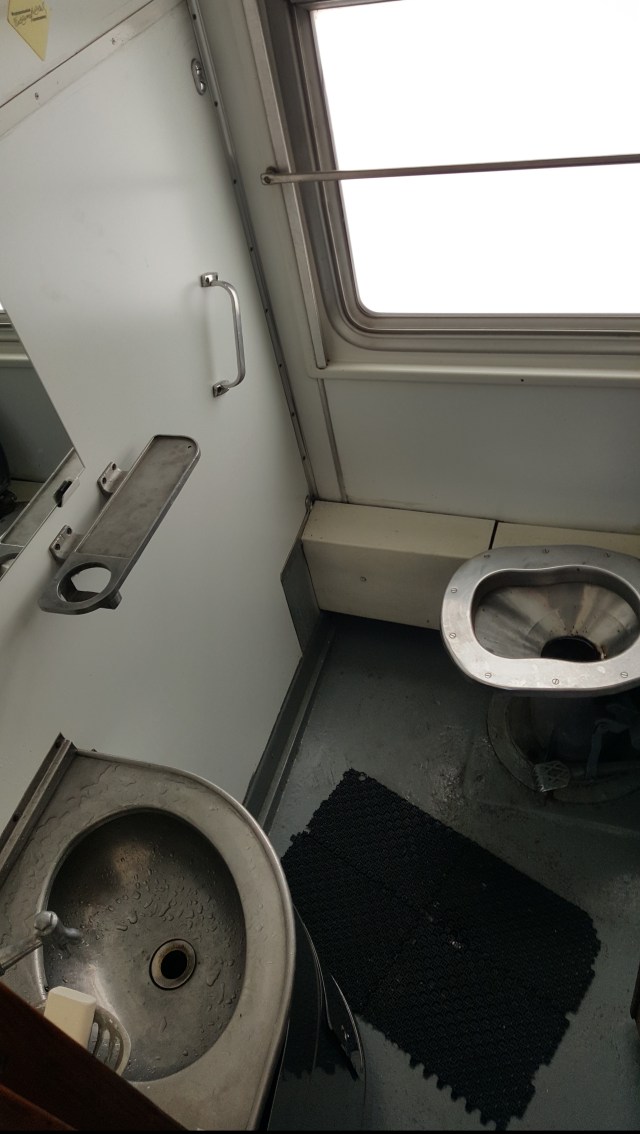
In all classes, the toilets are identical (although SV may feature extra lace doilies and plastic flowers) even if the number of passengers using them varies. Unless the toilets are of the modern closed-system type (which really is luxury), the provodnitsa will lock them around 20 minutes before and after station stops, to avoid polluting urban railway tracks. This is a right nuisance.
Bed Time
Regardless of class, each passenger receives a thin rolled-up mattress, a pillow, and a blanket. Additionally (although an extra fee may be required), passengers are issued with sealed pack containing two sheets, a pillowcase, and a small hand towel. The blanket, pillow, and mattress are only supposed to be used in conjunction with the railway-issued linen, and while you could in theory do what you fancy, a run-in with the provodnitsa is a never a good a idea.
A nice cup of tea
The best feature of ex-Soviet long distance trains is the hot water boiler (often known as a titan’) located at one end of each carriage (opposite the provodnik/itsa’s) office. It is possible to buy tea or coffee, often served in traditional glass mugs, or (and this is the exciting bit) to help yourself to boiling water using your own mug. It’s a good idea to bring some tea bags, coffee, powdered milk and sugar, or even some instant noodles. Nothing is more traditionally Russian (or Armenian, or Ukrainian) than sitting on your bunk, reading a book, listening to the sound of the train, and drinking a nice cup of ‘Waitrose Gold’ tea.
Obshchi – a ‘money can’t buy experience’
For completeness, mention should also be made a of mysterious ‘fourth class’, known as ‘Obshchi’. This is only available on certain trains and perhaps only at peak times. An ‘Obshchi’ carriage is a ‘platskart’ carriage with more people crammed inside – and no bedding provided. Bays that would contain six passengers are booked to accommodate nine. Suffice to say, you really don’t want to be travelling in ‘Obshchi’, although it could conceivably be described as an authentic ‘money can’t buy’ experience.
Privacy or fun? Choosing the best class
So which class is the best pick for a ride on the railways of Russia and the former Soviet states? Well, it depends what kind of experience you want out of your holiday. The highest, ‘SV’ class gives extra space and comfort, and is good for a couple who want some time alone, but for single travellers, being cooped up with just one stranger can be rather intense. For the most part, SV is an easy, albeit in some cases eye-wateringly expensive way to travel, but you do rather miss out on all the fun.
Platskartny, (third class) on the other hand, can be a bit too fun. It can be noisy and crowded, but conversely the two-bunk alcove in each bay can be a nice semi-private space for two travelling together. It’s also a good choice for lone females, as sharing a closed compartment with what could possibly be a group of men may not appeal. The open dormitory gives a certain feeling of safety in numbers. Platskartny is also a great place to be if you want to see everything that is going on, to observe other travellers, and will ensure you have plenty of stories to tell. When taking an international train, Platskartny also has the advantage of allowing you to see how far away the passport/customs officers are, and to be ready at just the right moment, rather than sit in your compartment listening for footsteps and knocks at the door. Platskartny is around half the price of Coupe, which is in turn roughly half the price of SV.
Coupe is probably the best compromise, as this combines a greater sense of personal space with enough passengers to make for an interesting journey. On my journeys I have shared compartments with off-duty soldiers, grandmothers, families, young couples, and singles of both sexes. Invariably some sort of conversation develops and it is rare not to be offered something to eat or drink. On longer journeys, such as on the Trans-Siberian Railway, there is a constant ‘churn’ of passengers getting on and off and different stops, so the change of roommates makes for an even more interesting adventure.
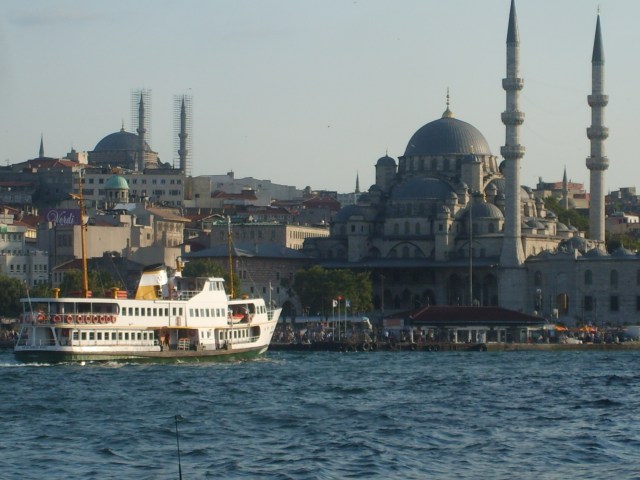
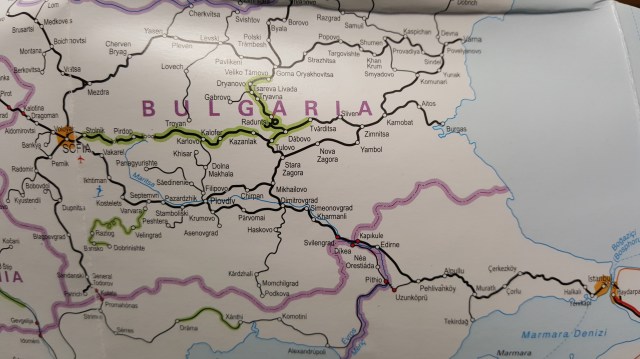
The ‘real’ Midnight Express was a train that ran from Istanbul to the Turkish city of Edirne, close to the Bulgarian border. Its uniqueness came from the fact that, en route, it would cut through a corner of Greece for a few miles before cutting back into Turkey. As this was a regular occurrence, and for a short distance in an otherwise sparsely populated area, no border formalities were required. As a result the train, which left Istanbul’s Sirkeci station at midnight, was popular with those who needed to get out of Turkey for whatever reason. Western backpackers whose visas had expired, criminals on the run, and probably a few smugglers too, would board this train in Istanbul, and jump off as the train passed through Greek territory.
An extract from the excellent European Rail Map. You can see the former route followed by the original ‘Midnight Express’ through Greece.
Today this Midnight Express still runs, but it doesn’t leave at midnight, no longer passes through Greece, and is partially operated by a rail replacement bus. As a consequence it might seem that it would be of limited use for those wishing to stay on the wrong side of the law, but as I discovered one August night in 2015, this was not the case.
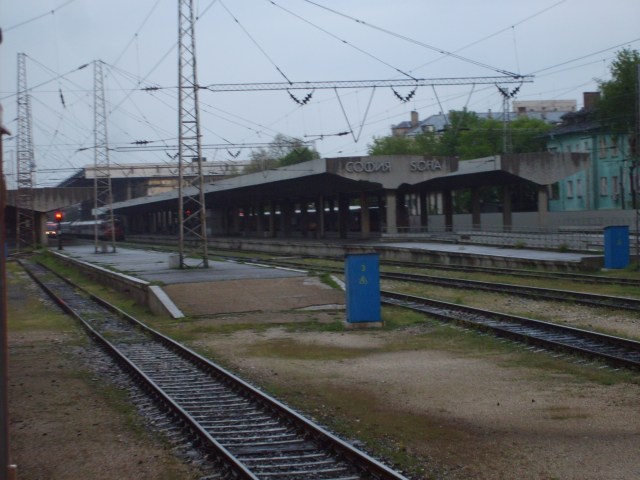
The train is in actual fact the ‘other half’ of the fabled Balkan Express, a ride on which was described in a previous post. Until recently this train ran from Istanbul to Vienna, although no single vehicle would ever make the entire trip; the carriages and locomotives being shunted on on off no less than seven times in the course of the forty hour journey. At the time of travelling, the Balkan Express was operating in two halves either side of Sofia, with both sections arriving/departing there just in time to miss one another.
On the night of my departure, the Balkan Express was operating as a replacement bus from Sirkeci station, the historic terminus of the Orient Express, to the final station in Turkey, the border post at Kapikule. After buying a ticket in the booking hall of the forlornly train-less terminus, we were ushered onto a modern white coach, where we found ourselves seated in front of a group of young Spanish women on their first Interrail adventure around Europe. At around 10.30 pm, after much shouting and waving of bits of paper, and accompanied by at least five railway staff, we were off. We joined the motorway towards Edirne and then promptly pulled into the services for 45 minutes.
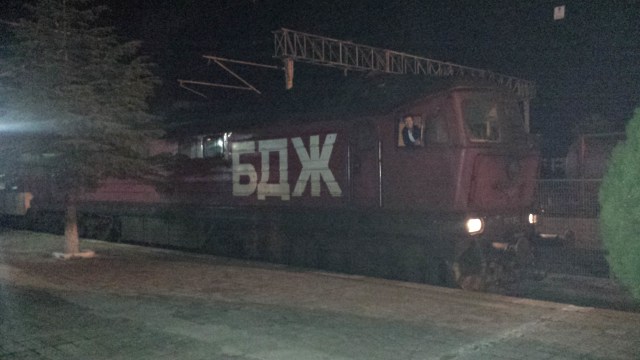
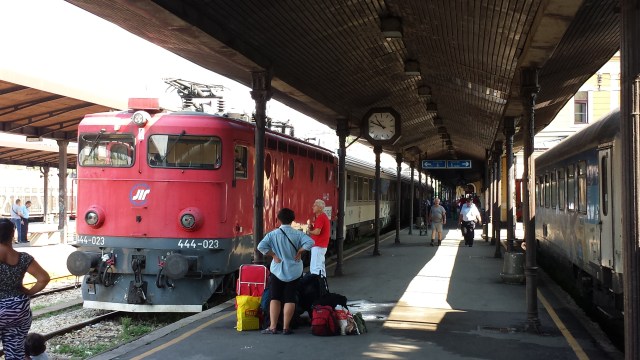
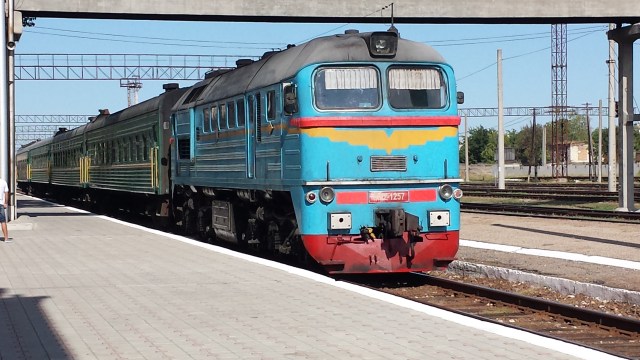
The largest, noisiest, and scariest-looking diesel locomotive pulling in with two of the oldest, dirtiest, and most decrepit-looking passenger coaches.
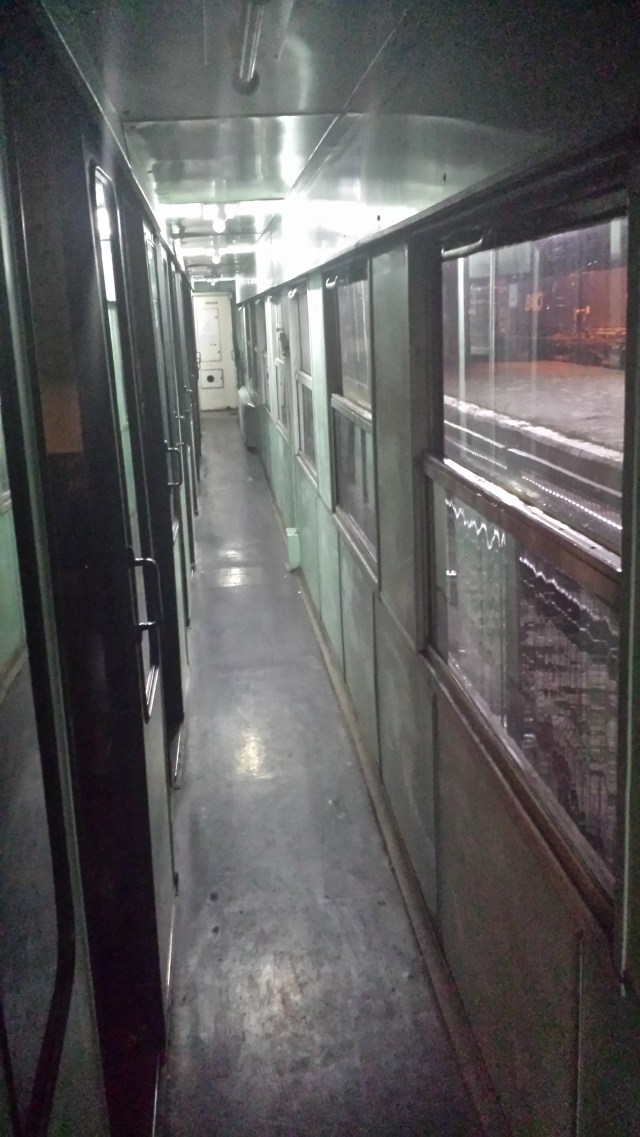
After a wholly unnecessary meal break (who would dare eat too much if they knew what toilet facilities lay in wait) we continued to the border, arriving at the deserted Kapikule station around 1.30 am. On staggering, bleary-eyed onto the platform, we discovered that the passport office was closed and the train was not due until 3 am. The small group of us variously sat in the waiting room (that, at least, was open), or paced the platform until, until some border police arrived and opened up – just as the largest, noisiest, and scariest-looking diesel locomotive pulled in with two of the oldest, dirtiest, and most decrepit-looking passenger coaches. After getting our passports stamped, we rushed to secure seats in the ‘more comfortable’ of the two, only to find the train would be splitting further on and we needed the other half. Luckily there was an empty compartment in the other coach, and along with the Spanish girls, we took it over. We closed the door and then watched the train fill up with other passengers, who seemed to have appeared out of nowhere (they weren’t on the bus) and had the most ridiculous quantities of luggage. They also seemed to be redecorating the entire carriage, judging by the bangs and crashes we could hear from the adjacent compartments.
At 3 am, a whistle blew, the engine roared like an incredibly hungry dinosaur, and we were off – but not for long, as after dashing across the border, the lights of the adjoining motorway checkpoint in the distance, we squealed to a halt at the Bulgarian border station of Svilengrad. Here, things got more interesting as what appeared to be an entire regiment of border guards were on the platform ready to welcome us. As they filed aboard the carriage and marched up and down the corridor, we wondered what rigours they might subject us to. Already, I was trying to look up the Bulgarian phrase for ‘Officer, it’s just powdered milk for my tea’. However I needn’t have worried, as after a cursory glance at our passports, they obviously had better things to do with their time.
The corridor outside our compartment.
Our neighbours were not so lucky, as shouted questions, loud arguments, and the sound of an electric screwdriver could be heard through the thin partition. Suddenly there was a scream – but this time from our own compartment as one of the Spanish girls, looking up at the mirror above the seat backs, suddenly saw it move as a police officer (standing in the other compartment) appeared in the hole where it had been, shining a torch at us.
Eventually we presumed that some sort of agreement had been reached as the passengers started to leave the train, with significantly less luggage than they had started with, but still looking perfectly happy. Talking to a few other ‘bona fide’ passengers, it appeared that it was all a bit of a game. The smugglers would ‘let’ the border guards find a few cigarettes, have a good old shouting match, pay a bribe, and get away with the rest of what they were carrying. So after two hours at Svilengrad (I had always wondered why cross-border trains are consistently late) it was smiles all round.
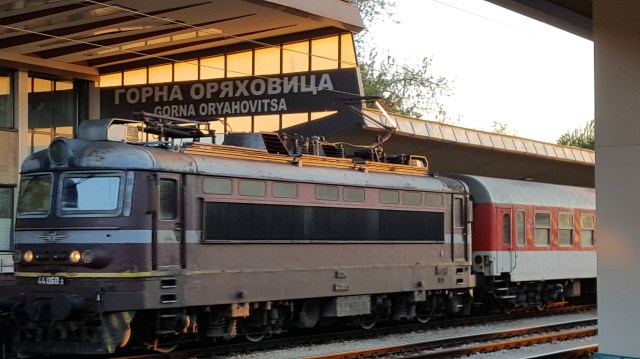
The rest of the journey was uneventful. With most of the passengers gone, and the train now down to one coach behind a (much quieter) electric locomotive, we bounced through the beautiful Bulgarian countryside as the first light of day appeared. A long day in Istanbul, and a night of some excitement meant that the slippery green benches of our compartment felt like a comfortable sofa, and so we slept soundly until our arrival at around midday in the station at Gorna Orjahovitsa.
The Balkan Express now only runs between Belgrade and Sofia, and just during the high summer, but until a few years ago it was the one the great trains of Europe. Conveying through sleeping carriages from Vienna to Sofia, Belgrade to Istanbul, and Budapest to Athens, the motley selection of multi-coloured rolling stock slowly snaked through the Serbian countryside, usually a couple of hours (or more) late.
I have travelled on this train a few times, but my most memorable journey was back in the Spring of 2010, when was travelling to Bulgaria. The through sleeper from Vienna to Sofia was not attached for the Vienna to Budapest section, so I had to take a couchette (a basic padded bunk car) from Vienna to Belgrade, and a seated coach for the remainder of the journey. Since these were simply different carriages attached/detached to the same Balkan Express, it made no difference to the journey time. However, as I soon discovered, it also made for a rather different travelling experience.
A Serbian train, stopped in the middle of nowhere.
Pleasant scenery en route to Nis
Comfortable accomodation
South of Belgrade, the train travels during the daytime, and as we headed south through the pleasant, slightly hilly, countryside, I had the compartment to myself. It was nice just to sit back and watch the scenery while listening to the sound of the train. Every now and then we’d stop at small stations and watch the red-hatted stationmaster wave us off, or stand, flag raised, as we passed through non-stop.
Heading towards Nis
Nis – not the end of the line
In the early afternoon we stopped at the city of Nis, where the electric locomotive and the Greece-bound carriages were taken off, and big dirty diesel engine added to the remaining portion, a through sleeping-car for Istanbul, another sleeper for Sofia, and the ordinary seated compartment coach in which I was, until then, comfortably ensconced. However, along with the new, rougher-looking locomotive, we also gained some new, rougher-looking passengers, a collection of around thirty men, women, and children with the most enormous quantities of luggage. Soon, the peace of my compartment was shattered as the empty seats were filled – and I found myself opposite a rather formidable-looking woman who appeared to know all the other passengers. In addition, two police officers also boarded the train, along with two conductors.
Shortly after leaving Nis on the single track line towards the Bulgarian border, many of the new passengers started unpacking their luggage and fiddling with the seats, the walls, and the panels on the ceiling. Their luggage seemed to consist almost entirely of large boxes of cigarettes. Despite me looking pointedly at the no-smoking sign, they began to rapidly stack the boxes on the floor and to open more bags containing even more tobacco products. I was getting the feeling that they were up so something, so I pretended not to notice and looked out of the window. At just that precise moment we chugged through a small station and I watched a woman in the next compartment through out an package in a plastic bag. As I looked back the station receding in the distance, I saw the station-mistress bend down to pick it up. I couldn’t help but wonder if this was why, a few minutes later, we got stopped for an hour at a red signal in the middle of nowhere.
As the train jerked to a stop, conveniently next to a level crossing, the driver shut the engine down and got out for a smoke (presumably he knew what to expect) and the conductors and police officers were conspicuous by their absence. Presumably they were relaxing in one of the sleeping cars, having been persuaded to turn a blind eye. Meanwhile a motorcyclist stopped next to the train and began a conversation with one of the ‘passengers’, while others started to open ceiling panels, unscrew air vents, take off seat cushions, and at one point, remove the entire window. Into the various cavities (including under the voluminous folds of the woman opposite) went the boxes of cigarettes.
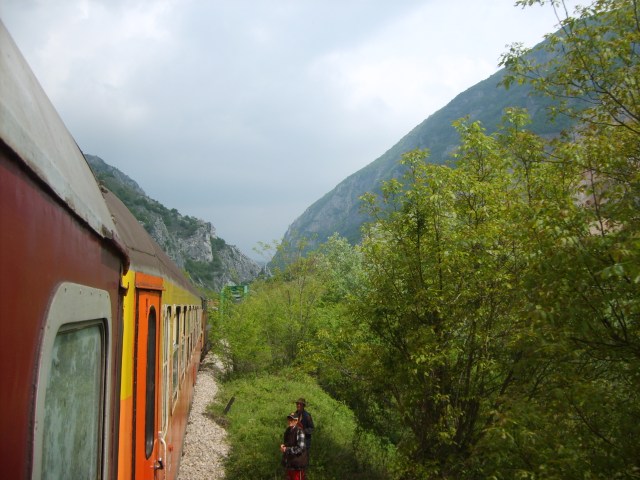
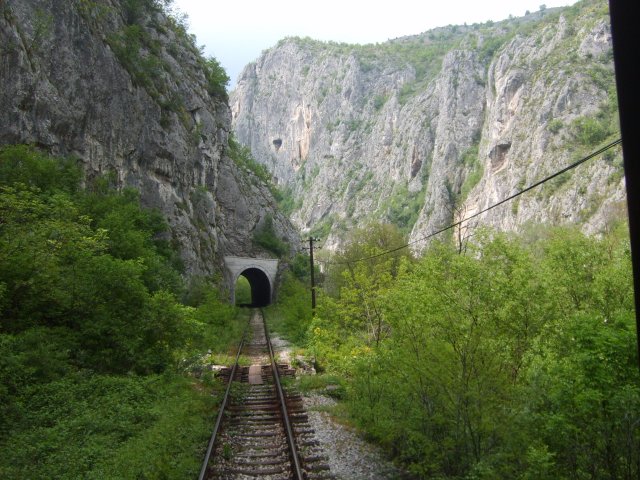
The stunningly scenic Nis to Sofia line.
Eventually the operation was complete, and as the driver sounded the horn and the train jerked into motion, the panels were screwed back in place, cushions fixed, and windows secured. As we then headed towards the border, and after another ‘drop’ to a station-mistress, the passengers tidied themselves up so that anyone would have thought they were just on an excursion to Littlehampton.
Half an hour later we reached the Serbian checkpoint, where guards boarded and made a show of searching the train. Not finding anything (and not having looked very hard) they waved us off and we continued over the border to Kalotina, the Bulgarian checkpoint and therefore the entry to the EU. As we drew to a stop, the confidence of the ‘passengers’ quickly evaporated. The platform was lined with border guards, tool boxes and step ladders in hand, and it was clear they meant business. As the guards got to work and the train crawled to the larger station at Dragoman, I also began to worry. What if the guards thought I was ‘one of them’ or, more worryingly, what if the smugglers thought I’d seen too much? I didn’t want to think of the consequences.
Already I could hear some shouts and arguments from further down the carriage, and I realised that I had one advantage over all the other passengers: My luggage was not screwed behind a panel and the timetable book I’d been avidly pretending to read told me that there was a local service to Sofia on the next platform…
I sometimes wonder what would have happened if I remained on that train. Would the guards have found the contraband? Would the smugglers make a deal and get away with it? Would they have all been arrested or sent back? Would I too enjoy some unique Bulgarian hospitality and make new friends. As I sat back on the local stopping service, and the suburbs of Sofia came into view, I breathed a very large sigh of relief.
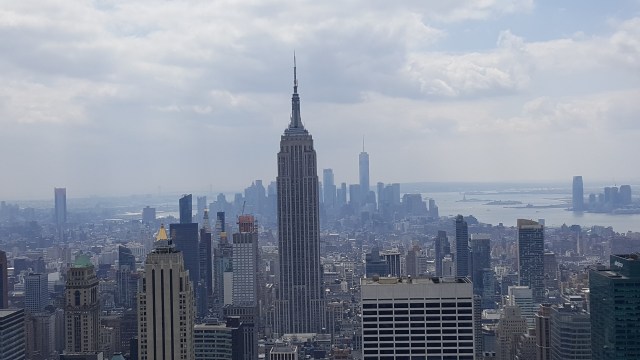
I had many reasons for wanting to visit the USA in April 2018, and one of those reasons was to experience the railways of (part of) the United States. The main reason was, of course, to visit my friend, Sylwia, and her lovely family, but wasn’t it convenient that they all lived a short distance from a railway station?
“New York?”, people said to me, “surely you can’t get there by train!” Well, as it turned out, I could. After searching for flights on the useful http://www.skyscanner.net, I discovered that the cheapest route across the Atlantic was to fly, via Paris, to Montreal in Canada, and then to return nine days later from New York JFK to London, again via Paris. As it turned out, strikes in France caused me to be re-routed to a direct Air Canada flight from Heathrow to Montreal – so sometimes these things work in your favour.
After arriving in Montreal, a bus and a (wholly unnecessary but rather interesting) metro ride took me to the luxurious Novotel hotel in the city centre, where thanks to a parishioner who works for Accor Hotels, I was able to get an excellent rate. An evening exploring the city (well the Catholic Cathedral and the rail station) gave me the chance to practice my pretty fantastic French language skills – and the locals a chance to practice their rather more fantastic English.
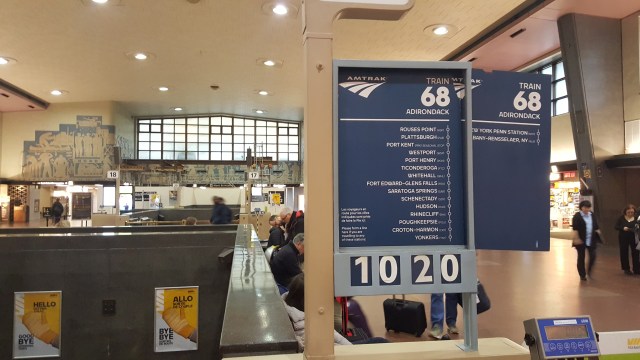
The next day my adventure really began, as I waited to board Amtrak’s (the US version of British Rail) ‘Adirondack’ train to New York Penn Station. This would be an eleven hour trip over the St. Lawrence Seaway, across the US border at Rousses Point, and along the shores of Lake Champlain, and finally down the Hudson Valley into the heart of New York City.
Boarding long-distance trains in North America is rather more of a palaver than in Europe. The American enthusiasm for queuing was clearly in evidence as I joined a long line that snaked across the subterranean concourse of Montreal’s Gare Centrale (the station is set, like a sausage in a toad in the hole, in the midst of a giant underground shopping centre). Eventually we were let down onto the platform where some rather bossy staff (I would encounter rather a lot of these over the next few days) were directing passengers to the front of the train (for intermediate stations) or to the rear (for those going ‘all the way’).
The train itself resembled a grounded 1970s airliner, with an unusal curved body, small windows, and steel bodywork, but the interior, although rather dated, was very luxurious. The seats were large and comfortable, with generous legroom and an ample recline. Electrical sockets, fold down tables, and footrests gave the carriage the feel of business class in a Boeing 707.
After setting off and emerging from the depths of the central station, we picked up speed across the St. Lawrence Seaway and on towards the border. I had wisely picked a seat in the coach adjacent to the buffet car, a place that I would, as you might expect, be visiting often. The buffet can best be described as British Rail InterCity in the 1980s, as many of the old favourites, such as microwaved cheeseburgers, giant chocolate chip cookies, and a rather unusual ‘steak’ sandwich that was actually full of cold chicken were on sale as decidedly modern-day prices.
The journey was largely spent reading, enjoying the absolutely beautiful scenery, visiting the buffet car – and often doing all three at once. Although the train would arrive a bit late into New York, the time passed very quickly and thus it didn’t feel like a long ride. There were some amazing views to be had from the rear door as we sped along the shore of Lake Champlain, and the 110 mph dash north of Albany was also quite a surprise.
Due to the lateness of the train, it was dark as we headed down the Hudson Valley, and even darker as we dropped into the endless tunnels under Haarlem, where the line to Penn Station diverged from the route into Grand Central. New York’s Pennsylvania Station was definitely not grand, though it was very central, and was a lot like Birmingham New Street.
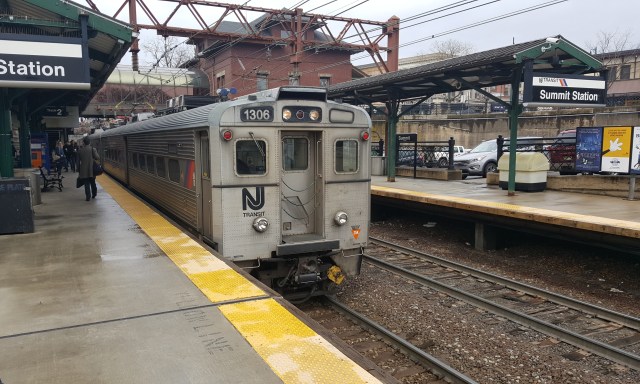
After finding my way to the concourse and buying a ticket, my journey continued by local train to Summit station, where at the end of the platform, Sylwia who I had not seen for a year and a half, was waiting for me.
Back in 2016, my journey back from Bulgaria to Staines took me through the curious city of Tiraspol. This was not exactly the most direct route, but since it included a ride on the legendary ‘Friendship Express’ from Bucharest to Chisinau, Moldova, it was well worth the diversion.
Tiraspol is part of the territory known as Transdniestr, or ‘Transnistria’. It is the part of Moldova which lies between the Ukrainian border (to the east) and the river Nistra (to the west) as well as the unusual city of Bender on the left bank.
Although technically part of Moldova, to an outsider the language and culture of Transnistria resembles that of Russia. It is similar to my own borough of Spelthorne, which although technically part of Surrey, is often assumed by outsiders to be part of West London. In addition, while many residents of Spelthorne look back with nostalgia on the now-defunct county of Middlesex, the residents of Transnistria display a similar nostalgia for the now-defunct Soviet Union. However, unlike in Staines, the people of Transnistria voted in the early 90s (in an ‘obviously entirely free and fair’ referendum) to become an independent country.
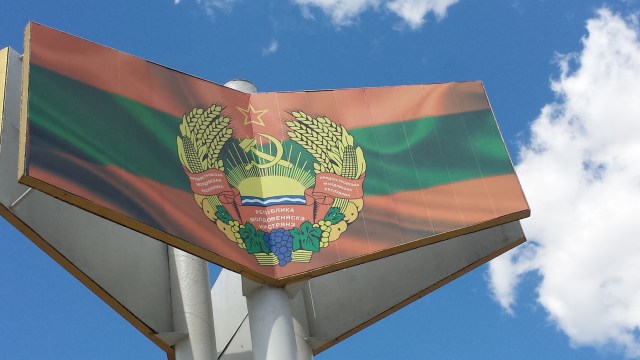
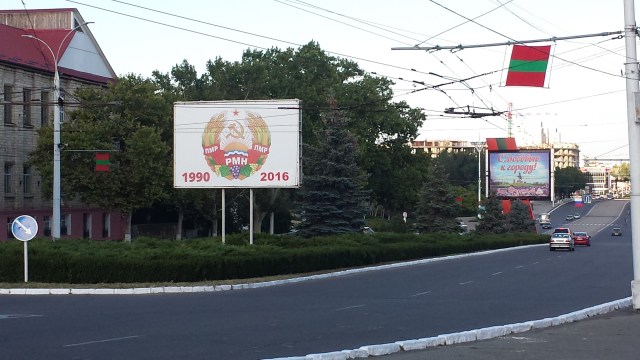
As it is in Transnistria that Moldova’s heavy industry and power stations are located, this was a rather lucrative move. After an unpleasant conflict in 1990-92, Transnistria has existed as an (albeit not recognised internationally) independent state. Although a great deal of the wealth of this ‘state’ lies in the hands of one or two wealthy Trump-like figures (who also own Transnistria’s major football teams), the country styles itself as a continuation of the Soviet Union, with the hammer and sickle displayed prominently and with roads named after Karl Marx and Lenin – whose bust seems to be on every street corner.
Transnistria does not appear to be a poor place, and the capital, Tiraspol is more clearly affluent than Moldova’s capital, Chisinau. This is not surprising as it is basically the prosperous part of Moldova following their own ‘Moldsit’!
In order to get in to Transnistria, it is necessary to pass through border posts and to fill in a migration card. A hotel booking or invitation is necessary for stays of longer thsn 24 hours. The currency is the Transnistrian Ruble, which although very attractive, is of no value anywhere else in the world (including Moldova).
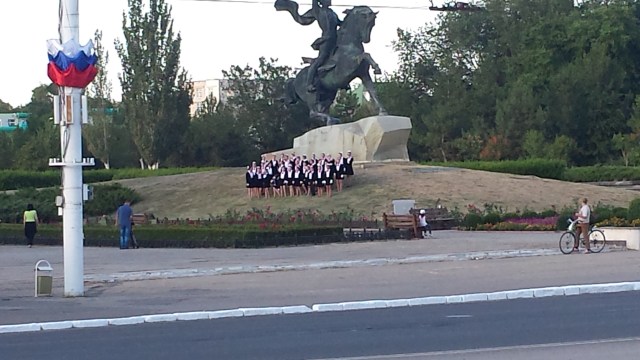
My 2016 visit to Transnistria was largely incident-free. I stayed in the luxurious Hotel Russia, where it appeared I was the only foreign guest. “Yes, Mr. Philip, I was expecting you”, said the receptionist before I could reach for my passport. When I went for a walk around the spookily deserted city centre, I couldn’t help but wonder if the schoolchildren’s choir who sang patriotic songs next to a replica tank had also been ‘expecting me’. After eating in a local restaurant chillingly named ‘Mafia’, a night in my comfortable room, and breakfast with raw toast, it was time to leave.
In the morning I headed, past the brandy distillery, to the combined rail/bus station. The platform was not exactly jammed as the twice-weekly train to Odessa rumbled in. A fellow passenger, spotting me taking a picture of the locomotive, introduced himself to me. He was an American, living in Tiraspol with his wife. I asked him why he chose to live here, and he told me that it was ‘quite nice’, that the government ‘take good care of their people’, and that he wanted to live somewhere outside the European Union. Before I could ask him what he had possibly done that caused him to want to live outside the reach of Interpol/Europol, the guard blew his whistle and I dashed aboard.
Exiting Transnistria by rail was pretty simple. The train had two classes, third class and fourth class. I was lucky enough to be in ‘third’, which was considered to be the premium option. While fourth class had wooden benches, third had cloth-covered seats and featured a small buffet. It was nice to enjoy a bit of luxury – and it was certainly a contrast from my previous visit to the ‘country’ in 2012.
Back then, I had visited Transnistria as a day trip from Chisinau. I took a local train to a station just outside the town of Bender, and followed the locals through a hole in a fence. Apparently I wasn’t supposed to do that. After a few hours mainly spent getting lost on trolleybuses and minibuses, I decided to head back to Moldova proper. However, this was where things got complicated, because having entered the Transnistria through a hole in a fence, I did not have an entry stamp. So at the ‘border’ checkpoint I was invited off the minibus for a ‘conversation’ with the guards, who looked at my passport and kept shaking their heads. Not wanting to spend the evening with them too, I asked if it was possible just to pay a fine – and indeed it was. There was, they said, a ‘paper process’ and I would just have to pay 40 US Dollars. Not having any dollars, I offered them a twenty pound note (I kept another one safely in my pocket). The guards looked at the note with a puzzled expression and despite me repeating “sterling” and “look, it’s the Queen”, they would not accept it. Did I have any Euros perhaps? But, sadly I didn’t (well, not anywhere they were looking). Eventually, worn down, they asked what money I did have. I pulled out 20 Romanian Leu (about £3.70) and they asked me what it was worth. After explaining that it was worth 40 dollars, followed by a smile and a handshake, I was off. In the end I felt rather sorry, and a little bit guilty for giving the ‘border guards’ such a small sum.
Last month, due to US President Trump’s decision to pull out of the nuclear deal, Iran has been very much in the news. But what kind of place is it? What is it like to visit this country, variously described as the axle of the ‘Axis of Evil’ and as a ‘state sponsor of terrorism’? Well, back in the summer of 2011, I made it my business to find out.
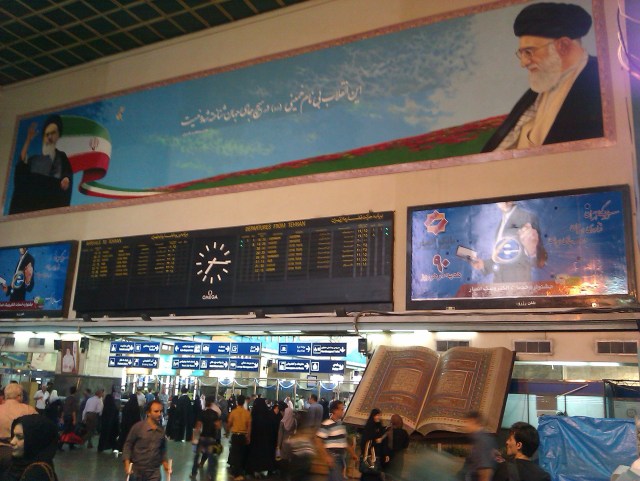
In order to get there, I travelled by rail and ferry from London to Athens, took a flight from Athens to Izmir, and then travelled by rail and coach to Tabriz, Tehran, Yazd, and Isfahan. I returned by air, flying Tehran to Ankara, train to Istanbul, and another flight back to London.
My impressions of Iran were extremely positive. The main annoyances were the difficulty of obtaining a visa, and the frankly appalling attitude to road safety. However these were the only annoyances. At all times, Iranians were friendly, hospitable, and did their best to communicate.
A few episodes that stood out for me:
Arriving at the border near the Turkish town of Dogubeyazit, I was nervous about crossing into Iran. What would the border guards be like? I need not have worried – they reacted like they had never seen a tourist in their lives and thought taking my fingerprints was the best fun they’d had all week.
A conversation with strangers on in a sleeping compartment on a train quickly turned to politics…
Stranger 1: “Where are you from?” Me: “England”,
Stranger 2: “Ah, Ingilstan, it is so beautiful there! Do you think Ingilstan or England is better?” Me: “They are both very beautiful”.
Stranger 3: “What do you think of our government?” Me: “I don’t know much about your government”
Stranger 3: “Did they tell you to say that?”
And then it turned to the recent (Summer 2011) riots in London…
Stranger 4: “Why are they protesting?” Me: “I don’t know”.
Stranger 4: “I hear it is because everyone in England wants David Cameron to resign and the soldiers are killing the protesters”.
Me: “I’m not sure it’s quite like that”
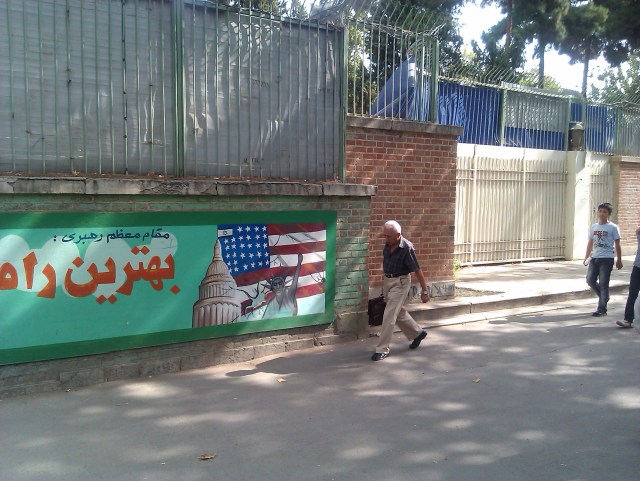
On my last day I went to visit the former American Embassy, known locally as the ‘US Den of Espionage’. As I photographed the frontage, a smartly dressed man advised me not to take any photos. I stopped and walked to the underground station. He followed me.
I remembered what they do in spy films. I jumped on a train, so did the man. The doors started to close. I jumped off and caught a train in the other direction.
On the way back from the rail station I ran for a bendy bus and jumped in the rear doors. Oops, it was the womens’ section! I jumped out rather quickly, while they all burst into laughter.
My reflection is that Iran does its best to be a modern and progressive country, but it faces considerable constraints. People appear to be well educated, progressive in outlook, and interested in the world outside of Iran. Although women are expected to cover their heads, arms, and legs, this is done with a varying degree of enthusiasm, to say the least. Women are very much visible in the workforce (in most sectors), in contrast to Eastern Turkey, where the female population is almost invisible. Given time, support, and the right kind of international encouragement, Iran will surely develop in a positive way. I very much hope that despite recent decisions of the US President, that things do not take a step backwards in this fascinating, beautiful, and welcoming country.
As I’ve said before, when I arrived in Staines seven years ago, I felt as if I had arrived in heaven on earth. The church and presbytery (what Catholics call the priest’s house) are both opposite the station. It didn’t take long before I took advantage of this situation. As a newly appointed parish priest, my first concern was to try to build on and develop what was an already vibrant and welcoming community. But what more could I do? We tried parties, we tried barbeques, and I even toyed with the idea of re-ordering the church so that it would be impossible to go to Mass and not have to look at someone else. In the end, however, a far better solution presented itself – the parish trip.
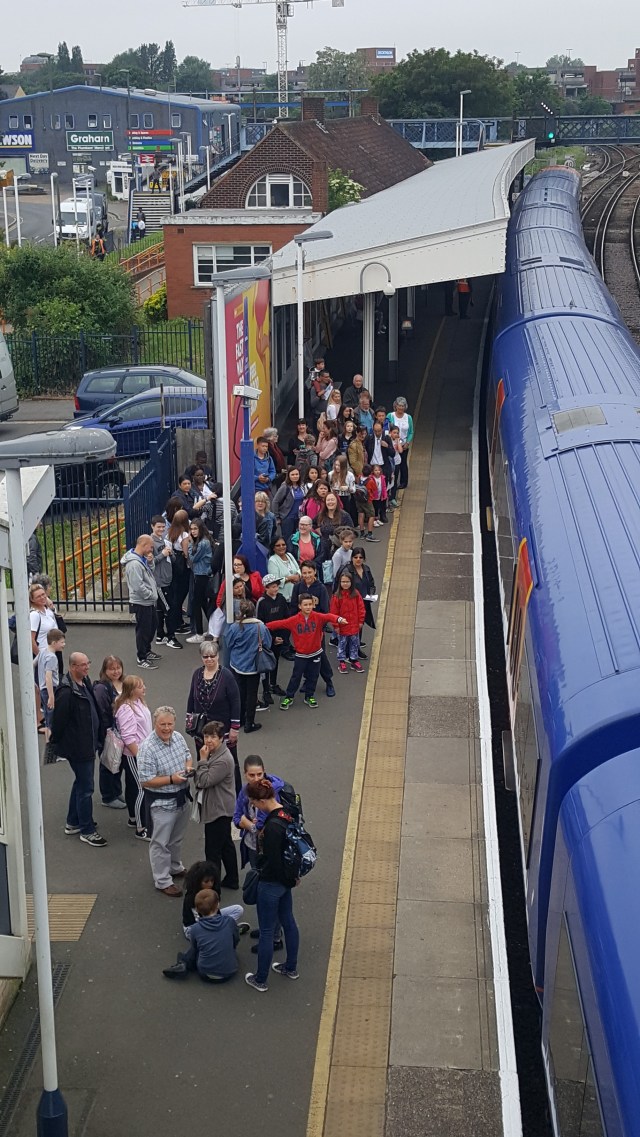
In many churches, where parish trips occur, it is usually by coach, but having experienced quite a few coach trips, I was not sure how the this would appeal to our young families. Also, being cooped up in a coach seat for hours is not that conducive to helping parishioners get to meet and make new friends. The location of the railway station and the fact we have a decent-sized car park meant that rail was by far the easiest mode of travel, as not only was it cheaper, but it was also more flexible, and far better fun. Many of our families did not travel regularly by rail, and this added to the excitement of our trips. We started with a simple trip to London, and over successive half terms and holidays, we travelled as far afield as Bristol, Cambridge, Bournemouth, and even Watford. Our parish trips now attract 50 – 60 participants, with a good mixture of ages, and are an established part of parish life. Pick any Friday morning in school half term, and you will likely see a large crowd causing havoc on Staines station at 9.30 am.
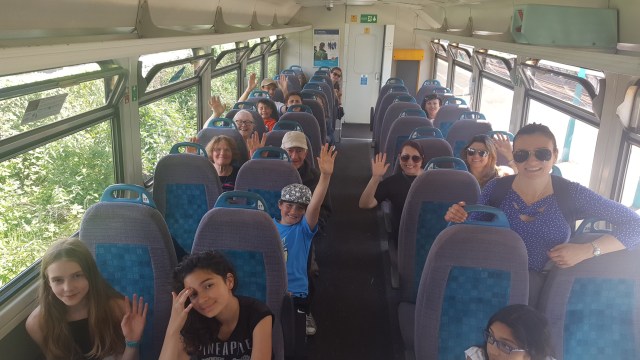
Our most recent parish trip was to Cardiff. “Cardiff?”, one of our (Welsh) parishioners asked, “I didn’t know there was anything to see.” Nevertheless, after a bit of hard sell about ‘the Nice of the Bristol Channel’, we soon sold all 64 of the tickets I’d rashly purchased from GWR. On the day of departure the forecast was mixed, so the group gathered in the church hall ready, it appeared, to climb Mount Snowdon. After distributing tickets and arranging the crowd into small groups, we were off on the 08.53 to Reading, a varied group of parents, small children, teenagers, grannies, and a dog. The journey to Reading was uneventful and we arrived with plenty of time to connect to the ‘famous Intercity 125’ to Cardiff. With reserved seats across four coaches, we arranged ourselves along the platform where expected our cars to stop, only to discover at the last moment the train was in reverse formation. Not only that, but there were two coach Es, and coach D was B at one end and D at the other. After much slamming of doors, and waving of reservations, we claimed our seats and settled down. As the train picked up speed along the pretty Thames valley, members of the group started to head to the buffet car for a cup of tea – and then came back again as the water boiler was broken. However the hassle of boarding, the lack of tea, and a few minutes late arrival did not dampen our spirits. The sun was shining and we were on a parish trip – what could be more fun?
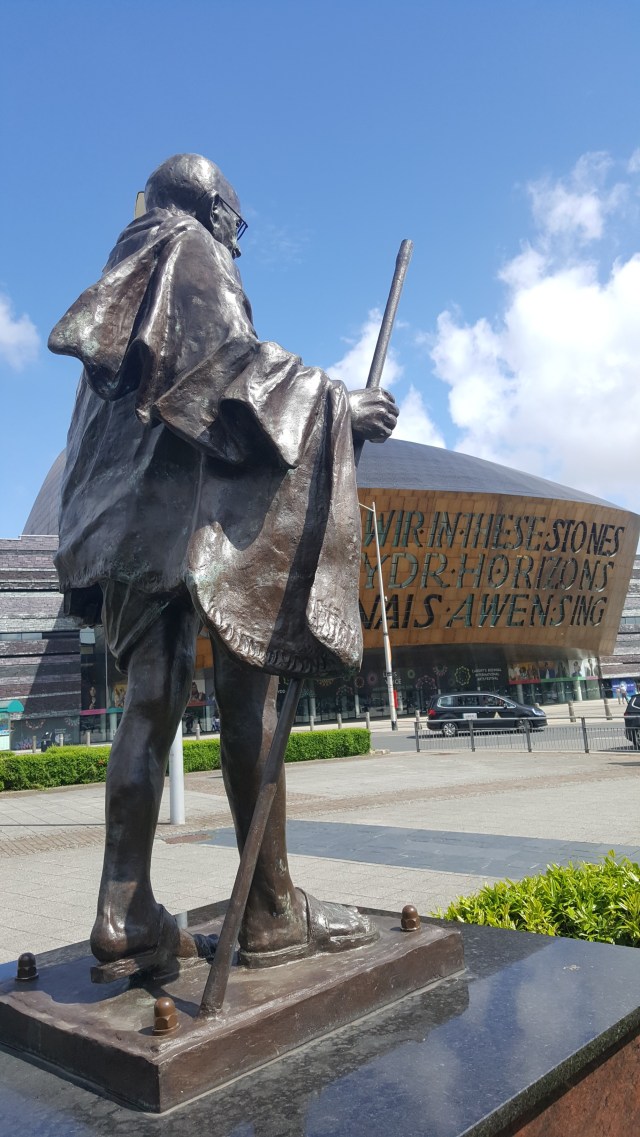
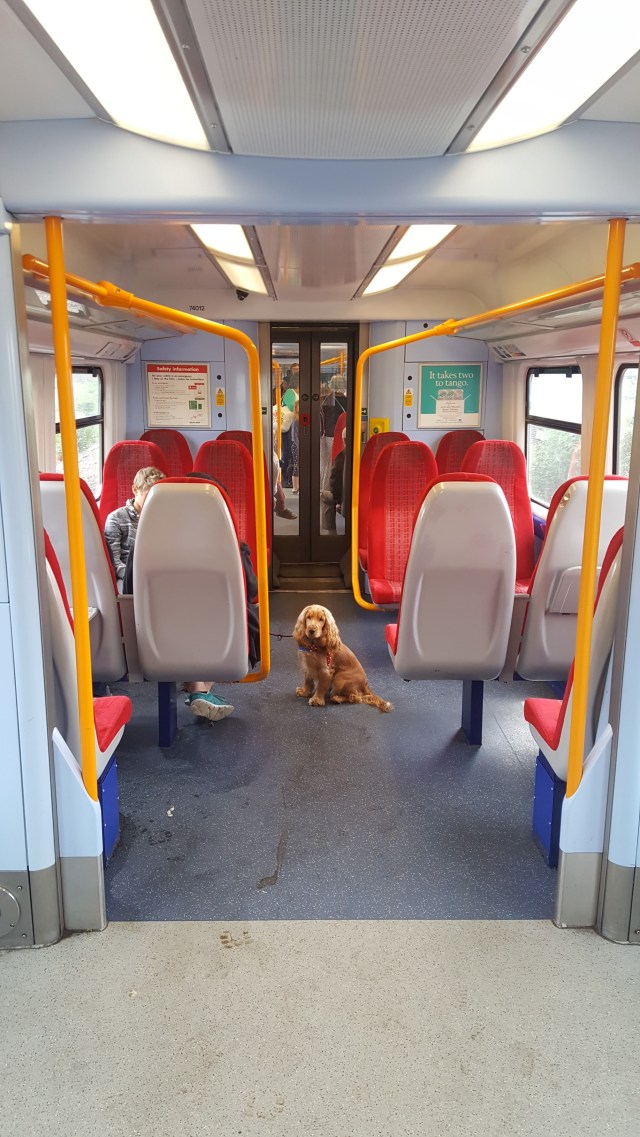
We arrived in Cardiff just before midday, and were immediately hit by a wall of warm air. Maybe this really was the Welsh Riviera? The sun shone all day as we walked as a group around the city before smaller groups peeled off to do their own thing. Cardiff Castle, Cardiff Market, McDonalds, and the Catholic Cathedral (where a few of us got a surprise personal tour with the Archbishop of Cardiff) were the preferred sights. In the afternoon most of the group ended up at Cardiff Bay, and when it was time to head home, we crammed aboard the Bay shuttle. “I’ve never seen a train with just one carriage”, said one of the children – we’re a lucky bunch living in Staines with our endless procession of ten-car trains.
Cardiff Bay itself was a pleasant, chilled place, where our group took boat rides, queued for ice cream, some had lunch, and made use of the luxurious toilets in the Arts Centre. The Ianto Jones Shrine and various Doctor Who locations added to the overall feeling of glamour and exoticism.
The journey home was like the journey there, just in reverse. The buffet car was providing a full service, and the children seemed to make endless journeys there and back – when they weren’t drawing, colouring in, or playing with their devices. An hour and forty minutes is not long when everyone is having fun and with a quick change and a headlong dash at Reading, we made it back to Staines, dog and all, in two and a half hours – a ‘parish best’.
The verdict on Cardiff was that it was a lovely city, that it was good how many people spoke English, and that it was amazing that they even had a Marks & Spencers in a different country. Sunburned, tired, and content, our ‘pilgrims’ headed home.
This article was first published in the December issues of ‘Oremus’ (the magazine of Westminster Cathedral) and the ‘Westminster Record’ (the Westminster diocesan newspaper), however since a) I wrote it, and b) I wrote it for free, I have no hesitation in also publishing it here…
Paul Theroux, in his book ‘The Old Patagonian Express’ wrote “Ever since childhood, when I lived within earshot of the Boston and Maine, I have seldom heard a train go by and not wished I was on it”. Here at Our Lady of the Rosary Church in Staines, with the rail station opposite, and frequent trains to Reading and Windsor a constant rumble, I feel the same. The sound of a train horn during the Liturgy of the Word, the passing of a steam excursion during Thursday Exposition, or the clatter of an approaching freight train breaking the silence at the Altar of Repose – these sounds punctuate parish life, and transport my imagination to faraway places, and lately to Vladivostok.
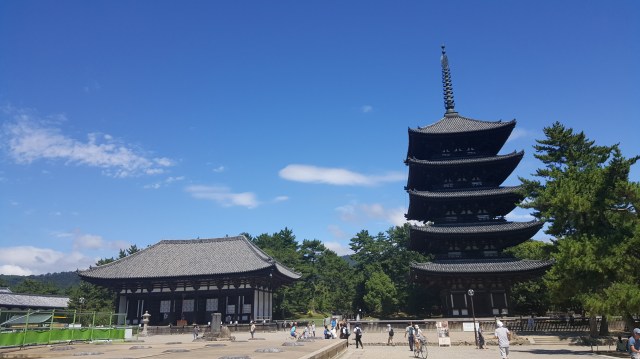
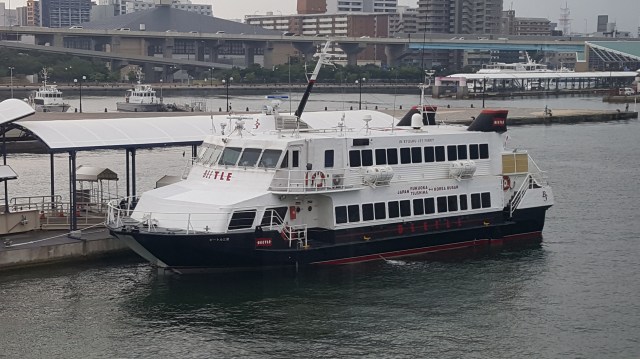
The journey from Vladivostok to Staines actually began in Tokyo. An Aeroflot flight via Moscow deposited us at Narita airport for nine days of exploring most of the southern part of Japan, before taking a fast hydrofoil (a kind of fast bumpy speedboat with a refreshment trolley) to Busan, in South Korea.
Arrival corresponded with mounting tension between the United States and North Korea, and as I lay in my hotel bed in Seoul over the following nights, I couldn’t help but wonder what a North Korea missile would sound like. A day trip to the border with North Korea didn’t help matters, and so it was with some relief we continued, via a short flight, to Beijing.
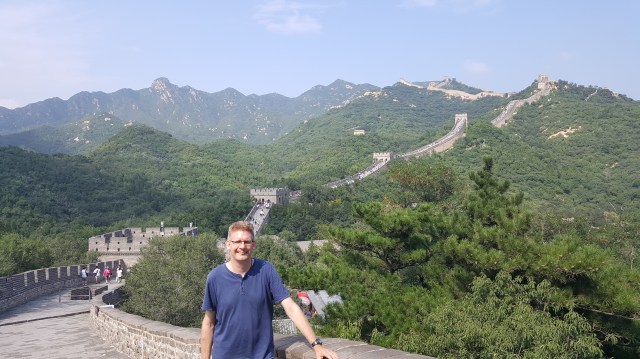
Beijing was a curious place, with a large and rather clumsy metro system, some gigantic shopping centres, and various old parts absolutely rammed with tourists. The highlight was Sunday Mass at the ‘South Cathedral’, where the French/English Mass attracted a massive crowd. Finally, after a visit to the Great Wall by rail (with, it seemed, most of the population of Beijing), I set out on my own on a night flight eastwards to Vladivostok.
Vladivostok is in the Russian Far East. It is located on the Sea of Japan, with North Korea to the south and China to the west. However the population, culture, and climate are all decidedly Russian. The city is best described as the ‘Kings Lynn of the Pacific’, as to be quite honest, there’s not much in the way of shopping or leisure opportunities. Instead, the centre bustles with sailors from the Pacific Fleet, plus a few lost-looking tourists off the ferry from Japan. There’s free Wi-Fi in the Sea Terminal, plus some rather hard cakes in the café overlooking the railway tracks. It was with some relief therefore that I boarded train ‘OO7’, which would be my home for three days as it headed west to Irkutsk.
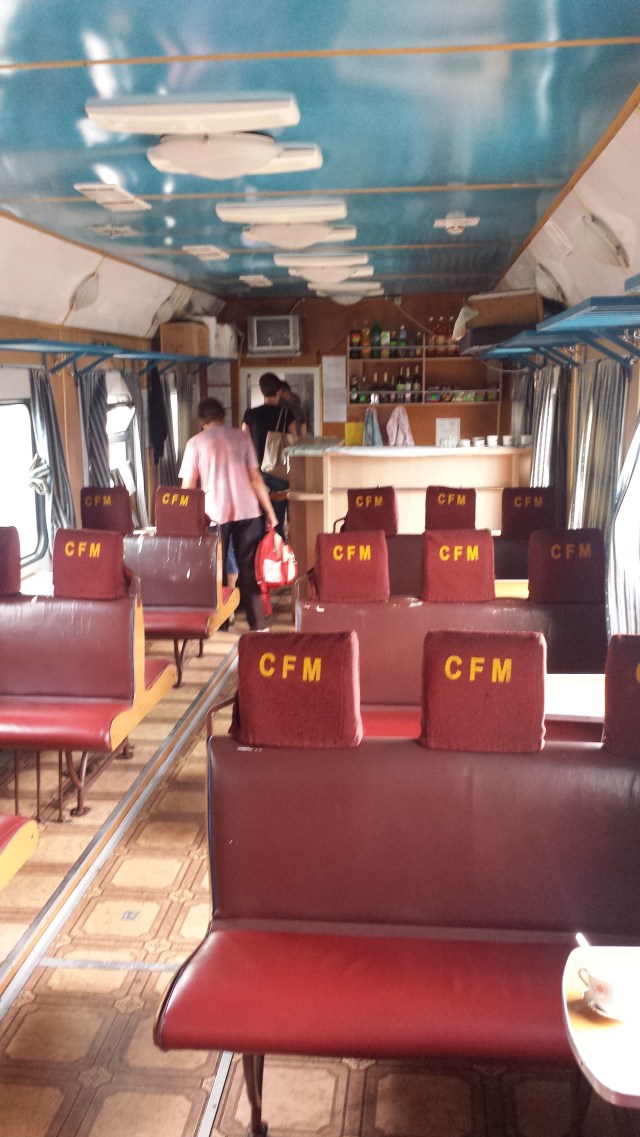
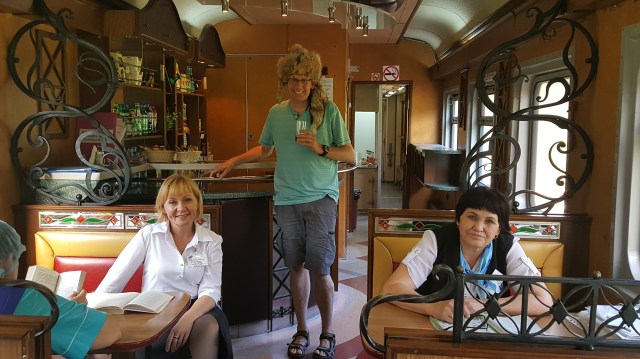
Train ‘007’ was exactly the kind of train you’d expect to find James Bond on. However I ended up sharing my 4-berth ‘Coupe’ compartment with assorted grandmothers, a young Russian woman who mysteriously produced chicken legs on Day 2, and some Russian men – every night it was someone different. Train 007 only does part of the Trans-Siberian route, and is not exactly Russian Railways flagship. However it was clean, comfortable, and punctual. On each of each of the three nights I ate in the buffet car, and had breakfast there in the morning. During the day, I read books on my kindle, drank tea from the samovar (there is free hot water in each coach – just bring a mug and tea bags), and watched the changing scenery while listening to the sound of the train. Every now and then, one of the buffet staff would appear with cold drinks, fresh pastries, or chicken legs.
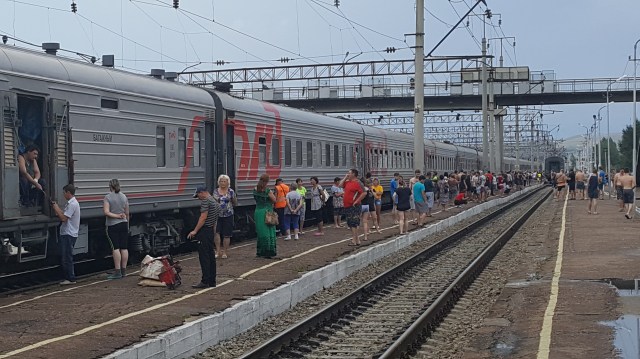
Each day the train stopped two or three times for 15 – 30 minutes, and the entire trainload got out to smoke, chat, or buy skeletal fish from old ladies. It was a great chance to stretch your legs and to take a good look at the other passengers.
Facilities on the train were basic but comfortable. The loos were done out in steel – though not of the stainless variety. They were kept clean and well-stocked by the provodnitsa (carriage attendant), a woman you would not like to cross. She would also mop your compartment each morning, whether you were in bed or not, and lock the loo doors if she thought you might be planning to go. There was no wifi on board – so the scarcity of electrical sockets was academic, but there was air-con and heating (the latter coal-fired, which is curious since the entire route is electrified).
The scenery was not as boring as I expected. There were plenty of endless silver birch forests, but also wooded and balding hillsides, wide river valleys, and finally the amazing sight of Lake Baikal, where I enjoyed a one night break – and a much-needed shower.
The next stage of the journey, from Irkutsk to Moscow, also took three nights, and was pretty much the same kind of thing – tea from the samovar, things that go bump in the night, Russian grandmothers with endless bags of food, and this time, as the carriages originated in Ulan Bator, a trainload of Mongolians.
As we headed west, we passed through the city of Yekaterinburg. This is where the Tzar and his family were killed in the Russian Revolution. It is also famous for the ‘U2 affair’, when an American spy plane was shot down. This is tactfully portrayed in one of the murals in the station’s waiting room.
Yekaterinburg
The ‘U2 affair’
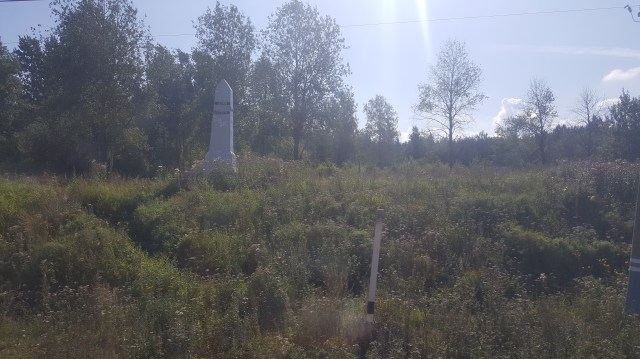
After Yekaterinburg, we crossed the Ural Mountains and thus passed from Asia into Europe. This is marked by a stone obelisk next to the line. I was very excited to cross the Urals, but in reality they make Hyde Park look like the Himalayas, as they are just a series of low hills. When I was at school, it was said that if you looked east from the school’s rather exposed playing fields the first high ground you’d encounter would be the Urals. Apparently, in the Urals they say that if you look west, the first bit of high ground you encounter are the playing fields of Uppingham School…
The journey then continued through the attractive city of Perm, over the River Volga, and after a locomotive change at Vladimir, we arrived in Moscow, a city which felt like a welcoming and comfortable home after so many days on the road. Of course the journey back to Staines was not yet complete. Still to come would be ‘third class’, in an open dormitory carriage on the night train to Kiev, and then via Slovakia, Poland, and Germany back to the Hook of Holland, from where a combination of night ferry, boat train, and London Underground would bring me to Waterloo for the final leg of the journey to the greatest place of all, the beautiful town of Staines.


























 Notes from the Buffet Car