Thinking about travelling during a lockdown that seems to have no clear end may seem like a futile exercise, but it is not. It might be a while before we can safely travel beyond Ashford or Egham, but this is a good time to look and think ahead.
It’s time now to, having whetted your appetite with routes and destinations, to look again at some practicalities. Namely, what to take with you.
If in doubt, leave it out
While the beauty of rail and sea travel is that you can generally take as much as you’re able to carry, that doesn’t mean that you should. Certainly the enjoyment of any trip is in inverse proportion to the amount of stuff you bring with you. The key maxim here is ‘If in doubt, leave it out’. If, further down the line (so to speak) you realise there’s something you really should have packed, you can buy it locally. Those boxer shorts, bought in Belgrade, will be a unique souvenir of your trip too.
The European Rail Timetable and Map
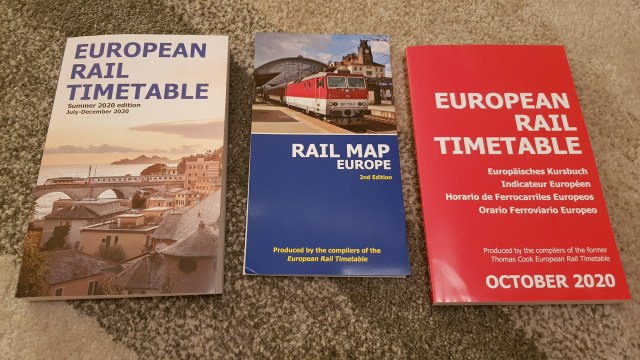
This is something you should have no doubt at all about packing in your bag – especially since, unlike clothes, it’s not easy to pick up on the road. Yes, you can just rely on a smartphone, but sometimes a proper map and a timetable can get you ahead of the game. Trying to ‘plan as you go’ is easier when you can visualise your route and connections – something an electronic device just doesn’t do so well. Order at https://www.europeanrailtimetable.eu/ and try to get the winter or summer edition. It will be like travelling with a very knowledgeable friend – like me, for example.
A good bag
This is important to get right – as your bag really will be both your friend and your enemy throughout your trip. Ideally, try to think ‘cabin bags’ when it comes to size and weight. As I said ‘If in doubt, leave it out’. If you want to buy souvenirs and other objets d’art, you can also pick up a cheap case or bag for the return journey. But on departure from Staines, you need to be travelling light.
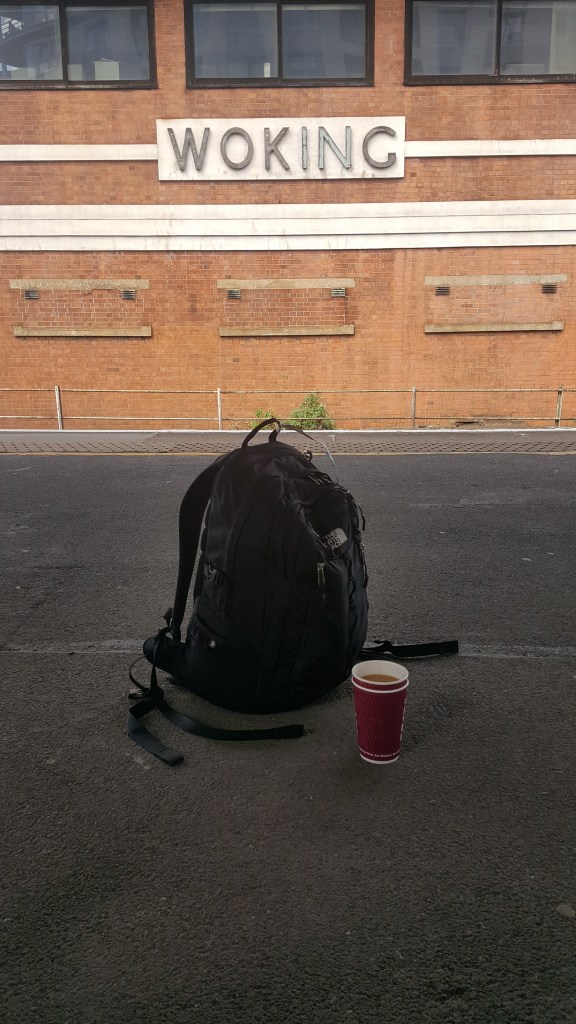
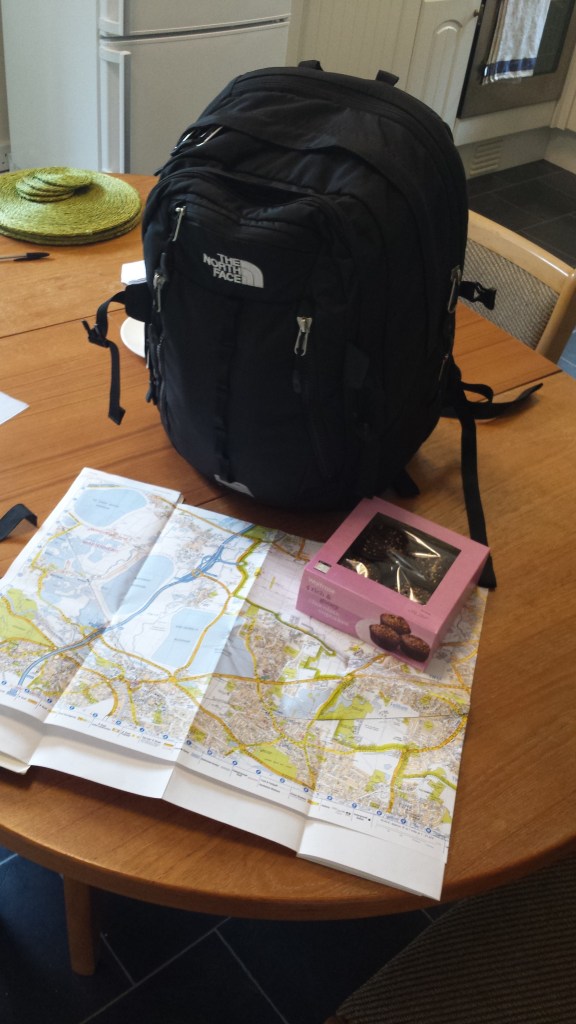
Essentially there are two luggage options – backpack or wheelie case. I prefer a small backpack (like a large laptop bag) to a huge rucksack. In fact my last one (from the reliable North Face) has lasted me a good six years and is still going strong. It’s quite enough for any trip from four days to a month.
Others may prefer a cabin-sized wheelie case. It’s really up to you and what you prefer. If you are travelling with people who might need assistance (children, older travellers), they are better off with a wheelie case (while you have a backpack) as you can then more easily take their case up the inevitable steps that any rail or bus journey seems to involve.
When putting actual things in the bag (like clothes), the best policy is to always pack for one week’s worth of travel – no matter how long the trip will last (unless of course it is less than a week). You do not need multiple pairs of shoes, or a different outfit for morning, afternoon, and evening.
If you do use a wheelie case, slip a small daypack inside, for use for days out when you want to leave your luggage at your accomodation.
Tea and coffee facilities
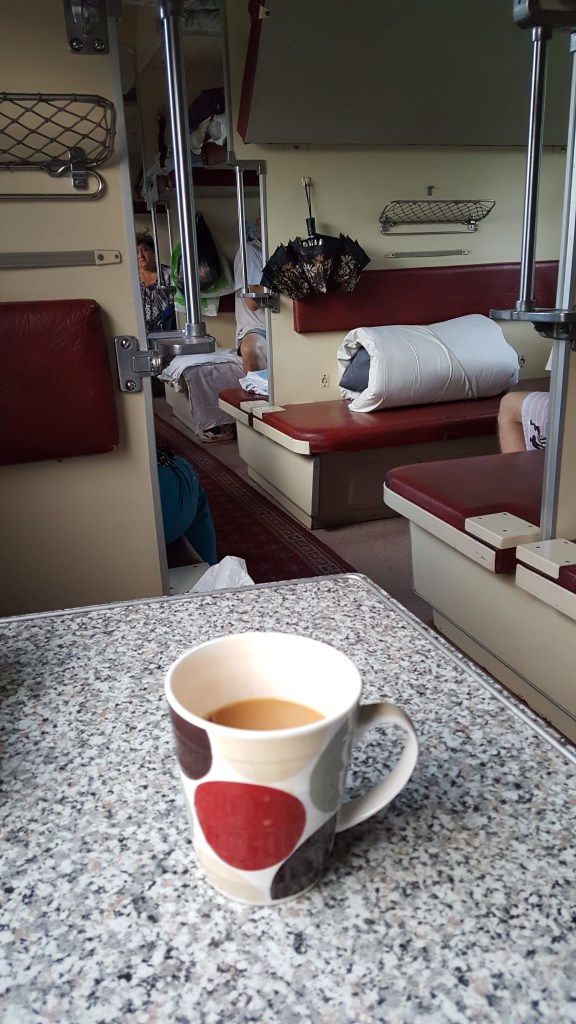
In the UK, even the cheapest, roughest, most basic hotel will have ‘tea and coffee facilities’ in each room. The bed may be awful, the loo down the corridor, and the room rates by the hour, but there’ll always be the chance to make a nice cup of tea.
This is most definitely not the case on the continent. Make sure you grab a final cup of tea as the Eurostar speeds through the Paris suburbs, because unless you come equipped, you won’t be enjoying one again until your trip is over. It’s no good ordering a cuppa in a cafe or restaurant either – British people often do, and get a very nasty shock. Lukewarm water, ‘tea’ bags that barely raise a tint, and a curious lack of milk mean that having a much-needed cup of tea in continental Europe is almost an impossibility. Even the poshest hotels, like the grand Hotel Moskva in Belgrade, will only ever disappoint.
For this reason, the sensible traveller always comes equipped. You will need the following:
- Tea bags – preferably Waitrose Gold ‘Extra Strong’, as these are both strong and have a lovely taste. It’s also fair trade.
- A mug – personally I prefer a proper mug. Others might want to take some form of travel mug, but the tea never tastes quite as good.
- A teaspoon – don’t forget the teaspoon!
- Sugar – if you need it.
- Milk – Milk is the big problem, as carrying around a pint of semi-skimmed won’t really work. A carton of UHT will also go off pretty quickly too, once opened. Those little mini-portions of milk can be handy, but check it is UHT (and doesn’t need refrigerating) – and beware they leak very easily. The best solution is a sealed tupperware pot of dried skimmed milk powder (such as ‘Marvel), which can be added to your tea (sparingly) when it has cooled a touch.
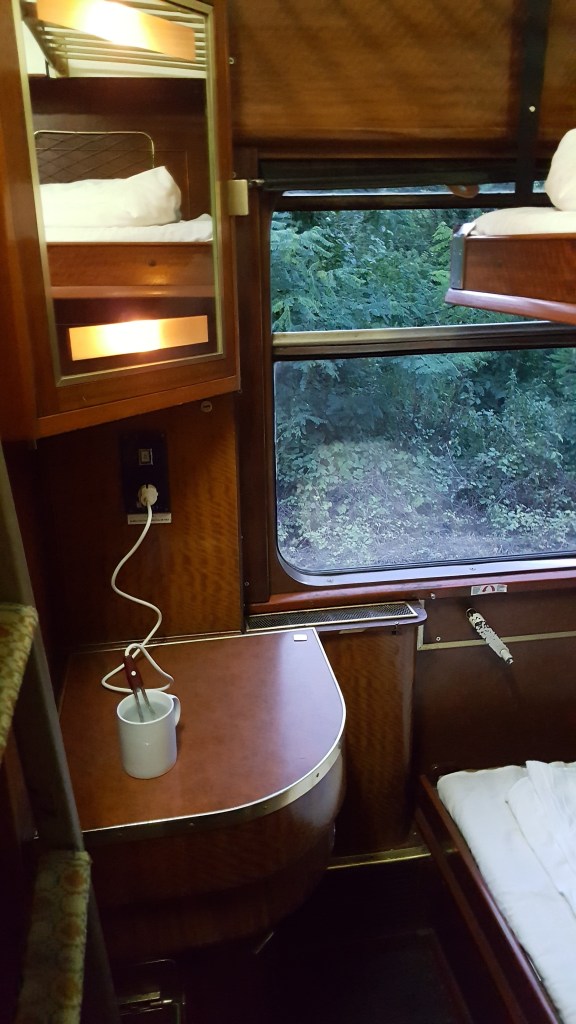
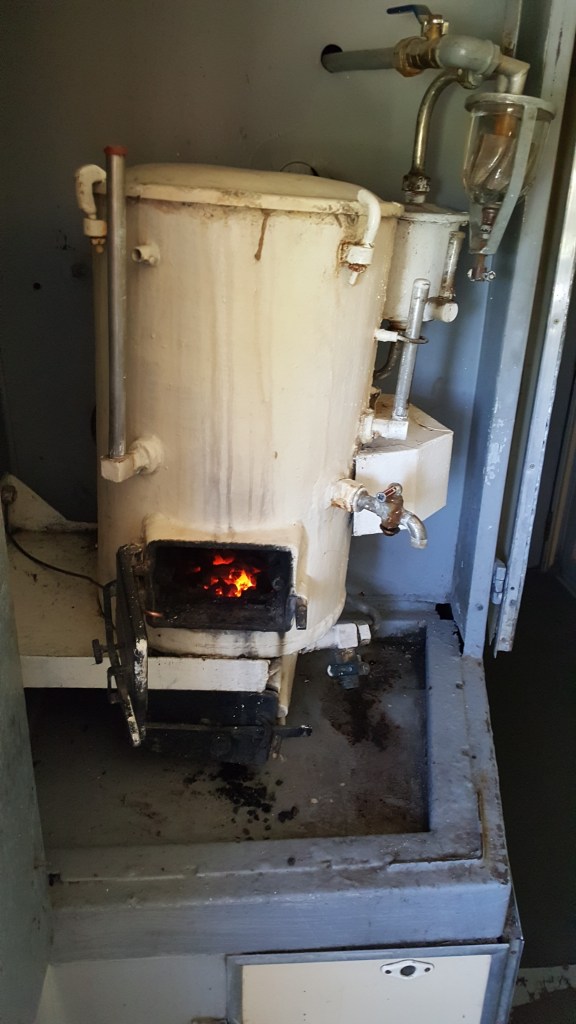
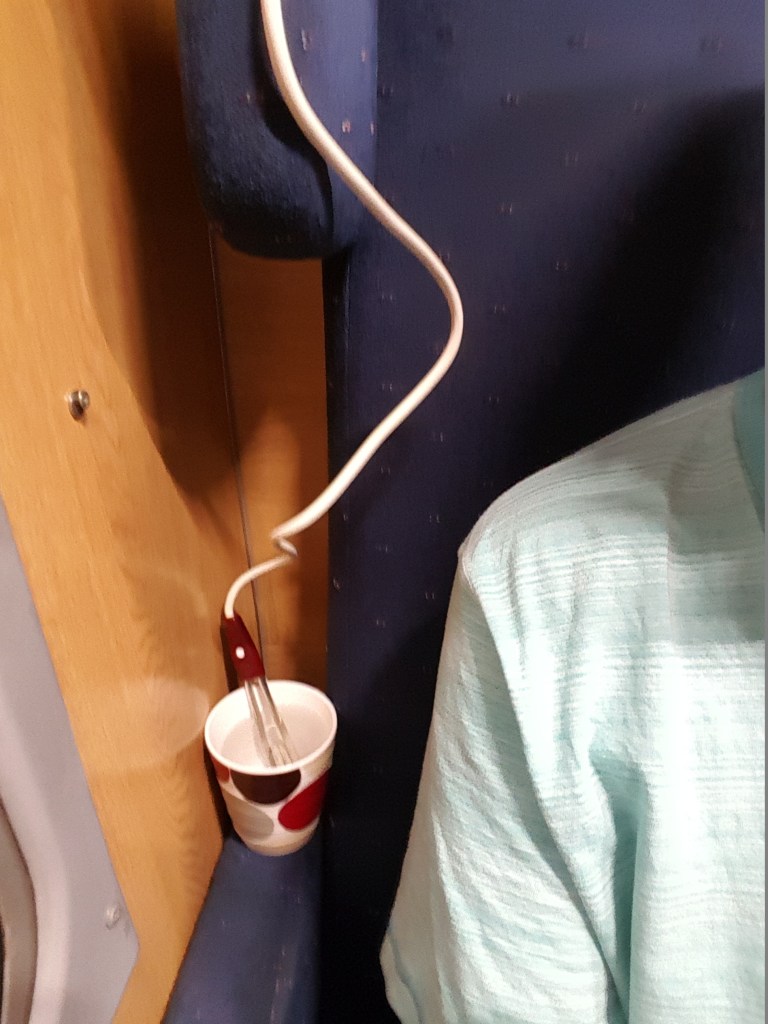
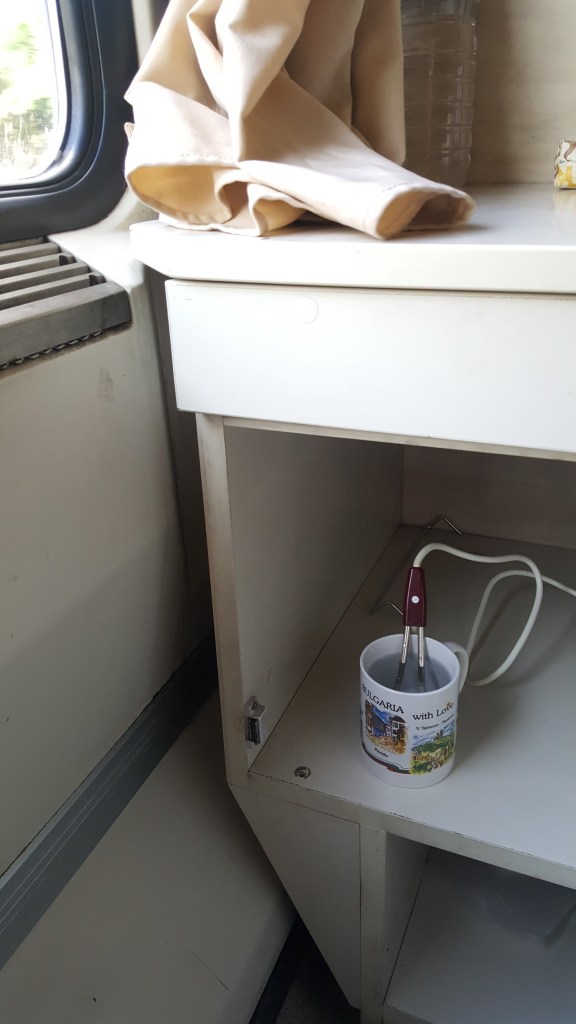
- A travel kettle – Trying to get water that is hot enough (i.e. actually boiling) for a cup of tea can be quite a challenge. Some cafes will oblige, and trains in the former USSR often feature a samovar at the end of the corridor – but it is a good idea to bring your own heating equipment. A small travel kettle is ideal, or (if you can find one) a portable heating element. I have an element that used to belong to my grandmother – and I take it with me everywhere. It is almost certainly illegal now!
We need, at this point , to have a word about America. Generally, in the United States and Canada you’ll have no problem getting a great cup of coffee, but there is absolutely no concept whatsoever of tea. Some hotels may leave some nice Twinnings tea bags in the room – but they will be as good as useless. This is because our north Atlantic cousins have an electricity supply that seems to be the equivalent of two AA batteries. The low voltage (110 volts) and flimsy wiring means that, unless you source a 110 v travel kettle, you’ll be waiting a couple of days for the water to boil. One solution is to try to make your tea using the ubiquitous coffee maker, but unless you like tepid, coffee-like tea, I would, if I were you, try to get help immediately.

What not to pack
It is not unheard of to lose your luggage or have it nicked. As a principle, you should never pack in such a way that the loss of your luggage would cause the curtailment of your trip. Yes, it will be inconvenient travelling without a change of clothes, and downright foolhardy with any decent tea bags, but the reality is that you can still (just about) live without them. Of course it will take a day or so to recover your sense of fun, but don’t be silly and rush home. Your adventure, after all, is only just beginning.
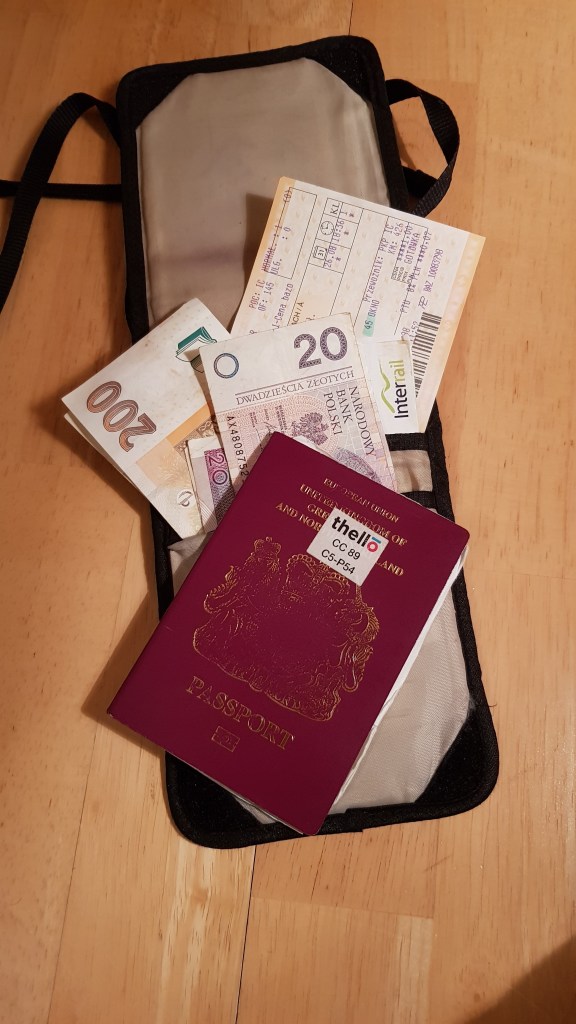
For this reason, do not put money, passport, phone, tickets, or other irreplaceable documentation in your bag. Carry them on your person. This includes when you are asleep in a night train – if sharing with strangers.
The most sensible investment then is in a concealed wallet. Forget about a money belt, as opening this sweaty pouch makes it look like you are about to expose yourself every time you buy something. Instead a flat wallet that can hang around your neck is the best choice. This should be worn inside your clothing, not on top of it – unless you want to invite trouble.
When you are on a night train, and if you would like to remove it – keep it in bed with you, attached to one of your body parts – and if you need to get up in the night for some reason, take it with you!

A shopping bag
As you prepare to rush out the door, don’t forget to stuff a reusable shopping back, like what you get at Waitrose or Sainsburys, into your luggage. It is handy for all sorts of things – for sitting on when you’ve got to sit on the ground, for containing your leaky shampoo bottle, for putting your dirty washing in, for trips to the supermarket, and for packing your souvenirs in for the return journey, or using as ‘hand luggage’ should you check in your main bag. In the most exotic parts of the world, a bag that says ‘every little helps’ shows everyone what a seasoned and experienced traveller you really are.
Swimming trunks
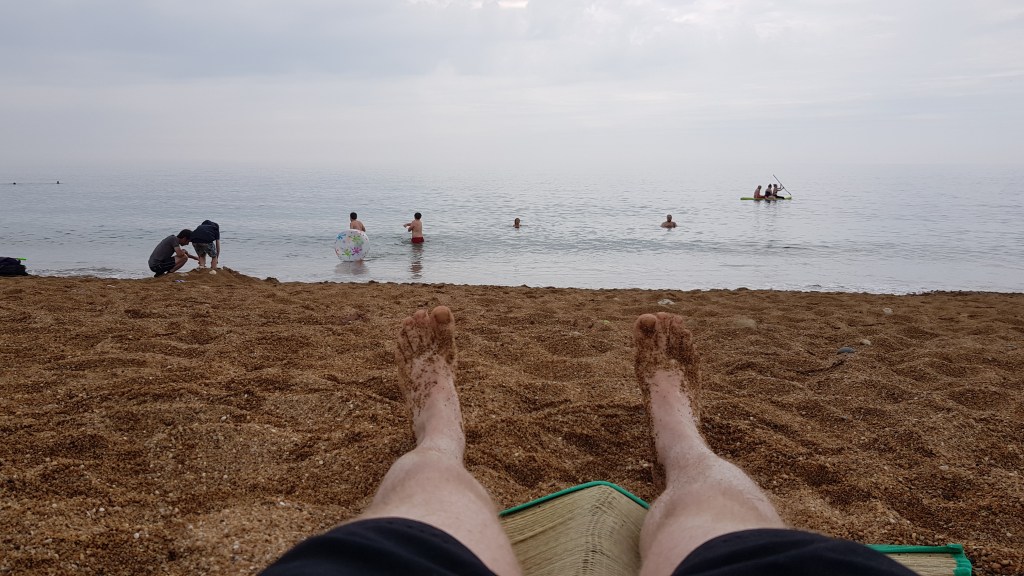
It is likely that at some point or other you will see a body of water and want to jump into it – but even if not, swimming trunks can be useful. In some shared night train accommodation, stripping down to your underwear is not the done thing – but a pair of loose trunks (not Speedos obviously…) will make for a more comfortable sleep than wearing your day clothes all night.
Conclusion
I’m sure you could add to this list, as everyone has their favourite ‘essentials’. But just don’t forget ‘if in doubt, leave it out’!
 Notes from the Buffet Car