There is an empire, an empire that stretches almost a third of the way around the world, where somewhere it always daylight and in another place always night, an empire which runs from the edge of the European Union to the Sea of Japan, from the Arctic Circle to the borders of Afghanistan, an empire that has withstood two world wars, the rise, fall, and rise again of oppressive regimes, a shared way of life that still grows strong and flourishes from the rising of the sun to its setting. That empire is the railway network of the former USSR. Although the political map of the region has changed beyond recognition, the railway rumbles on.
Although the railways of the various former Soviet states are no longer controlled by Moscow and much has changed, for better or worse, they are all pretty similar. It can be daunting experience riding the rails in this region, but this post explains the various classes of travel on conventional (non high speed) long distance trains.
Four Classes
Ever since Soviet times, there have always been four main classes of accommodation on long-distance trains in the former USSR. While not every train conveys all four classes, chances are that most services will have at least two of them. Before you plan your next trip to the former USSR, you’ll be glad I told you a little bit about them…
‘SV’ – The epitome of luxury and style
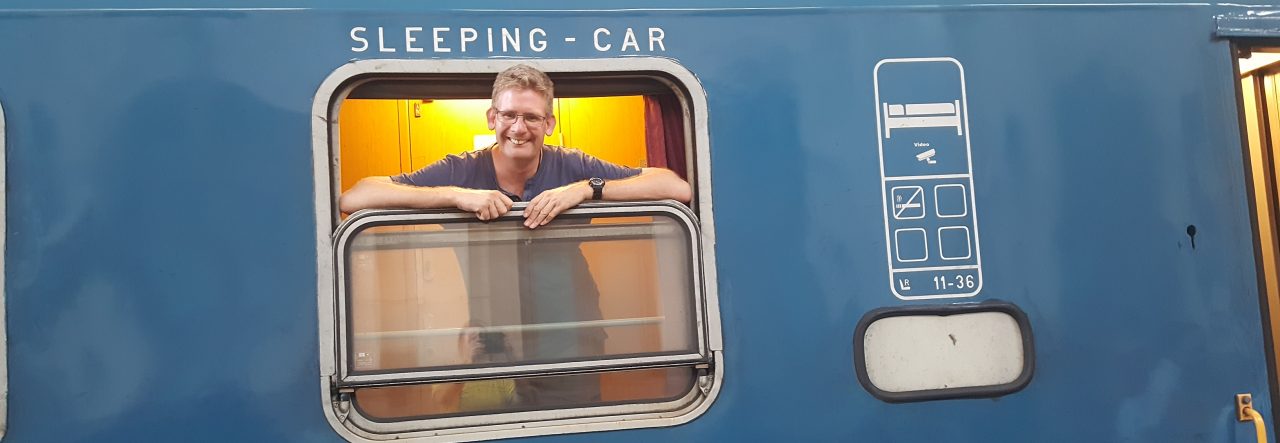
The highest and most expensive class is known as ‘SV’, which is short for ‘Spalny Vagon’, a term which literally translates as ‘Sleeping Car’. It is also referred as ‘First Class’, or even as ‘De Luxe’, which is quite an exaggeration. In Soviet times, it was known as ‘Soft class’, however don’t expect memory foam mattresses. ‘SV’ carriages usually have nine compartments, each with two lower-level bunks. A bit more space is most definitely a luxury, but it is not the ‘De Luxe’ that you or I may have been expecting. Apart from having half the number of passengers per compartment (and therefore half the queue for the lavatories), and a number of tasteful additions to the decor, it is a standard Russian-style long distance carriage.
Cooped up in Coupe
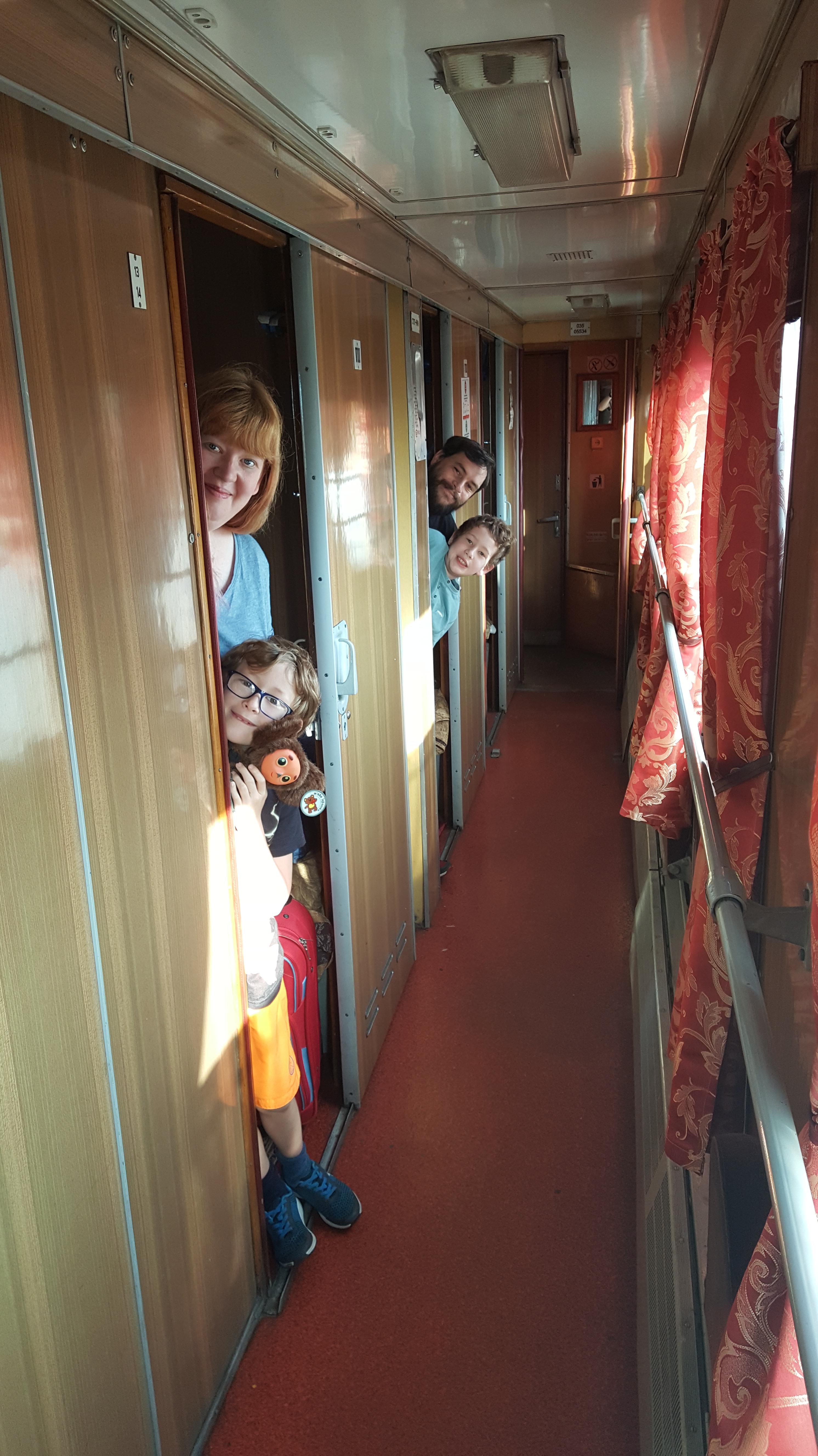
The next class down is ‘Coupe’, which is also known as ‘second class’. ‘Coupe’ translates as ‘compartment’. In Soviet times this used to be known as ‘hard class’. It is not, however, as bad as it sounds. The compartments and bunks are identical to ‘SV’, except there are also two upper bunks in each ‘coupe’, thus four people instead of two sharing the same space – and there double the number using the same shared facilities. Compartments are also less likely to be adorned with tasteful acoutrements, although net curtains are guaranteed and even some plastic flowers may feature. Coupe passengers are expected to make up their own bunks (SV passengers often have it done for them already), but the bedding is the same in all the top three classes.


See and be seen in Platskartny
‘Platskartny’ is the name given to the third class of travel. This is perhaps the most atmospheric of all the classes, and is worth trying at least once, if only for a short journey. The unique atmosphere is enhanced by the sound, sight, and indeed smell of 53 other passengers, as the bunks are arranged in alcoves in an otherwise open plan carriage. Toilet facilities are identical to the other classes – it’s just that there will be more people using them. Air-conditioning, which sort-of exists in the higher classes, may sort-of not exist in platskart. Choice of bed is pretty crucial in this class. While everyone has their preferences, the alcoves closest to the toilets (the lower-numbered berths) are probably best avoided. On one side of the aisle, bunks are arranged in alcoves of four (two lower, two upper berths). On the other side of the aisle, two chairs face each other over a small table. At bed time, an upper berth is lowered from the wall above the window, and the table is lowered and turned over to join with the seats in creating a lower berth. These two bunks are thus in line with the direction of travel. Some prefer to travel this way, but anyone of 6 feet high or over will have to bend to fit.


The Provodnitsa/Provodnik
All three classes have some things in common. The most obvious common feature is that each carriage enjoys the service of it’s own dedicated attendant, known as a provodnik (male) or more commonly a provodnitsa (female). These members of staff will not take kindly to be pushed around and will often push you around first just to show who is boss. While provodniks and provodnitsas (especially) can be strict and rather stern, being polite, friendly, and cooperative will usually bring out their kind and protective side, and maybe even a smile. Carriage attendants work long hours and spend many days and even weeks away from home. For them, looking after ‘their’ carriage is a source of pride, and they will often work incredibly hard to keep everything clean and functioning. Thus carriages are often old, but very well looked after. On a journey lasting more than one night, the attendant will mop or hoover every compartment daily, clean communal areas, and keep the ancient toilets pretty spotless.


The Loo
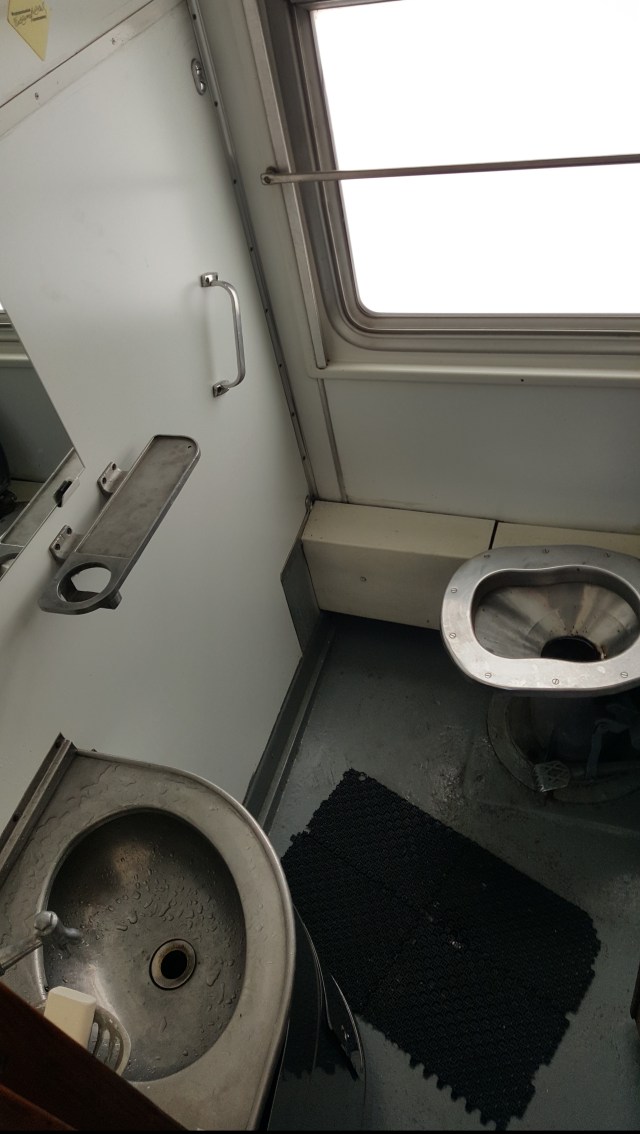
In all classes, the toilets are identical (although SV may feature extra lace doilies and plastic flowers) even if the number of passengers using them varies. Unless the toilets are of the modern closed-system type (which really is luxury), the provodnitsa will lock them around 20 minutes before and after station stops, to avoid polluting urban railway tracks. This is a right nuisance.
Bed Time
Regardless of class, each passenger receives a thin rolled-up mattress, a pillow, and a blanket. Additionally (although an extra fee may be required), passengers are issued with sealed pack containing two sheets, a pillowcase, and a small hand towel. The blanket, pillow, and mattress are only supposed to be used in conjunction with the railway-issued linen, and while you could in theory do what you fancy, a run-in with the provodnitsa is a never a good a idea.
A nice cup of tea
The best feature of ex-Soviet long distance trains is the hot water boiler (often known as a titan’) located at one end of each carriage (opposite the provodnik/itsa’s) office. It is possible to buy tea or coffee, often served in traditional glass mugs, or (and this is the exciting bit) to help yourself to boiling water using your own mug. It’s a good idea to bring some tea bags, coffee, powdered milk and sugar, or even some instant noodles. Nothing is more traditionally Russian (or Armenian, or Ukrainian) than sitting on your bunk, reading a book, listening to the sound of the train, and drinking a nice cup of ‘Waitrose Gold’ tea.


Obshchi – a ‘money can’t buy experience’
For completeness, mention should also be made a of mysterious ‘fourth class’, known as ‘Obshchi’. This is only available on certain trains and perhaps only at peak times. An ‘Obshchi’ carriage is a ‘platskart’ carriage with more people crammed inside – and no bedding provided. Bays that would contain six passengers are booked to accommodate nine. Suffice to say, you really don’t want to be travelling in ‘Obshchi’, although it could conceivably be described as an authentic ‘money can’t buy’ experience.
Privacy or fun? Choosing the best class
So which class is the best pick for a ride on the railways of Russia and the former Soviet states? Well, it depends what kind of experience you want out of your holiday. The highest, ‘SV’ class gives extra space and comfort, and is good for a couple who want some time alone, but for single travellers, being cooped up with just one stranger can be rather intense. For the most part, SV is an easy, albeit in some cases eye-wateringly expensive way to travel, but you do rather miss out on all the fun.
Platskartny, (third class) on the other hand, can be a bit too fun. It can be noisy and crowded, but conversely the two-bunk alcove in each bay can be a nice semi-private space for two travelling together. It’s also a good choice for lone females, as sharing a closed compartment with what could possibly be a group of men may not appeal. The open dormitory gives a certain feeling of safety in numbers. Platskartny is also a great place to be if you want to see everything that is going on, to observe other travellers, and will ensure you have plenty of stories to tell. When taking an international train, Platskartny also has the advantage of allowing you to see how far away the passport/customs officers are, and to be ready at just the right moment, rather than sit in your compartment listening for footsteps and knocks at the door. Platskartny is around half the price of Coupe, which is in turn roughly half the price of SV.
Coupe is probably the best compromise, as this combines a greater sense of personal space with enough passengers to make for an interesting journey. On my journeys I have shared compartments with off-duty soldiers, grandmothers, families, young couples, and singles of both sexes. Invariably some sort of conversation develops and it is rare not to be offered something to eat or drink. On longer journeys, such as on the Trans-Siberian Railway, there is a constant ‘churn’ of passengers getting on and off and different stops, so the change of roommates makes for an even more interesting adventure.


 Notes from the Buffet Car